
GIORDANO BOETTI EDITIONS
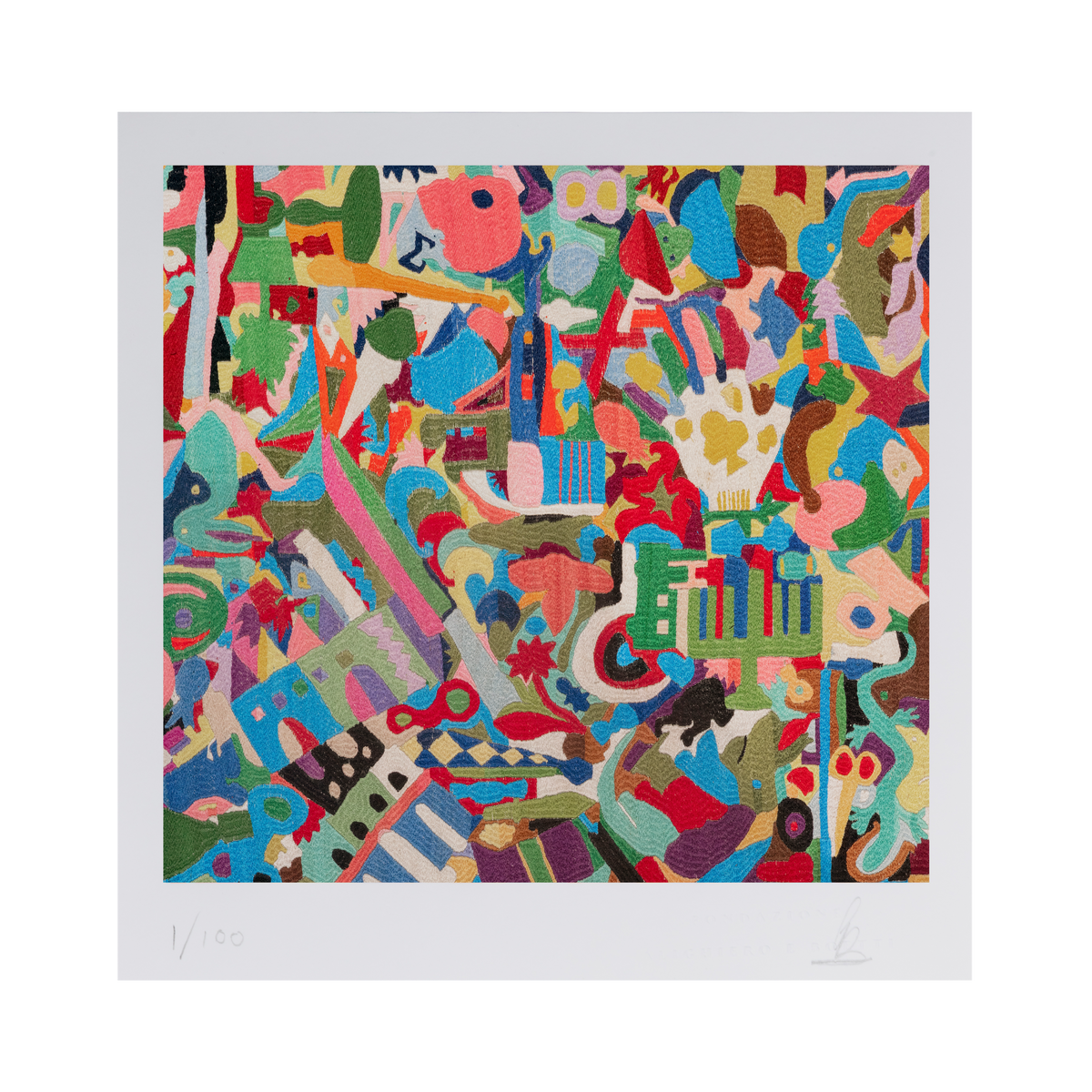
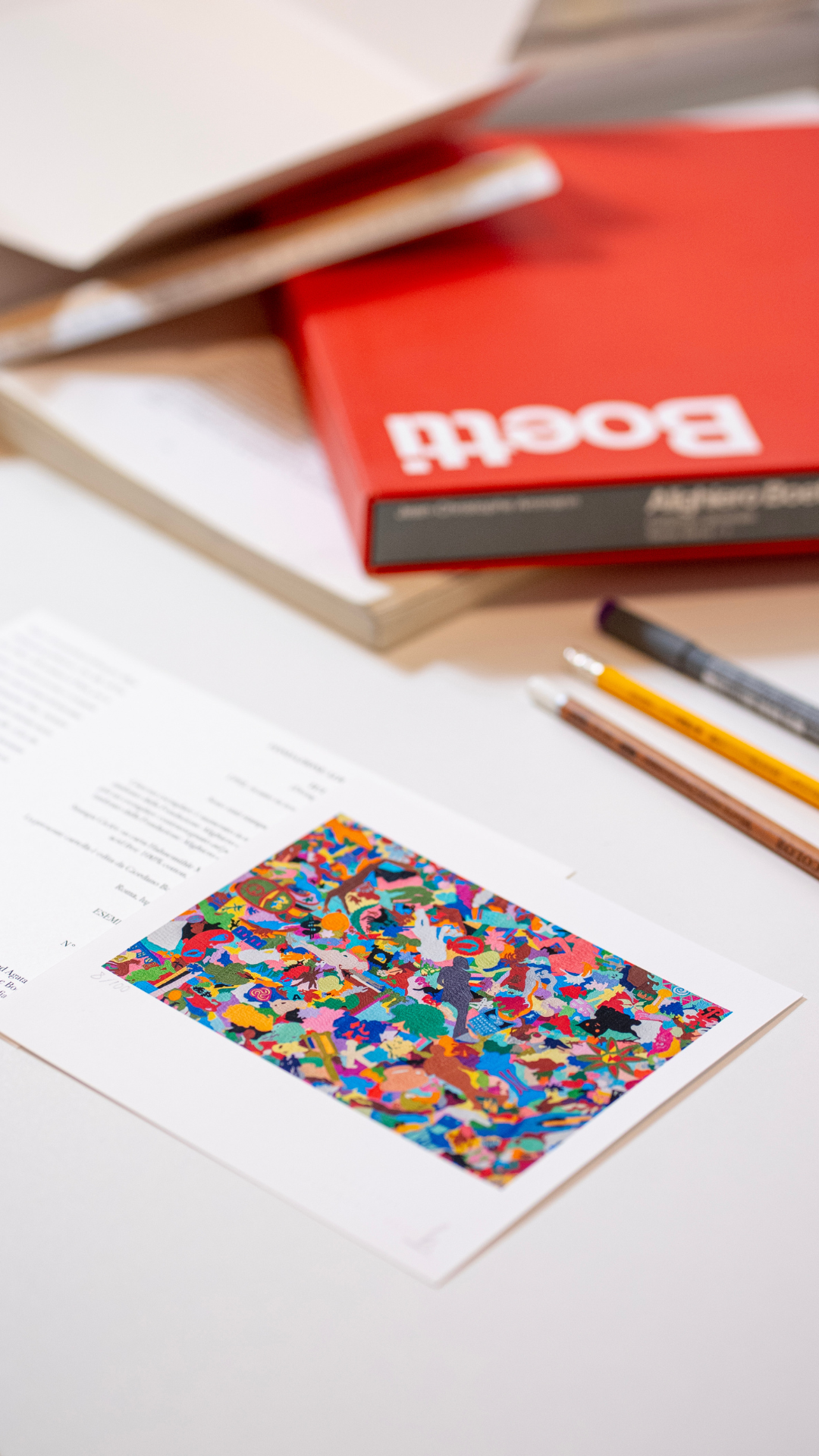
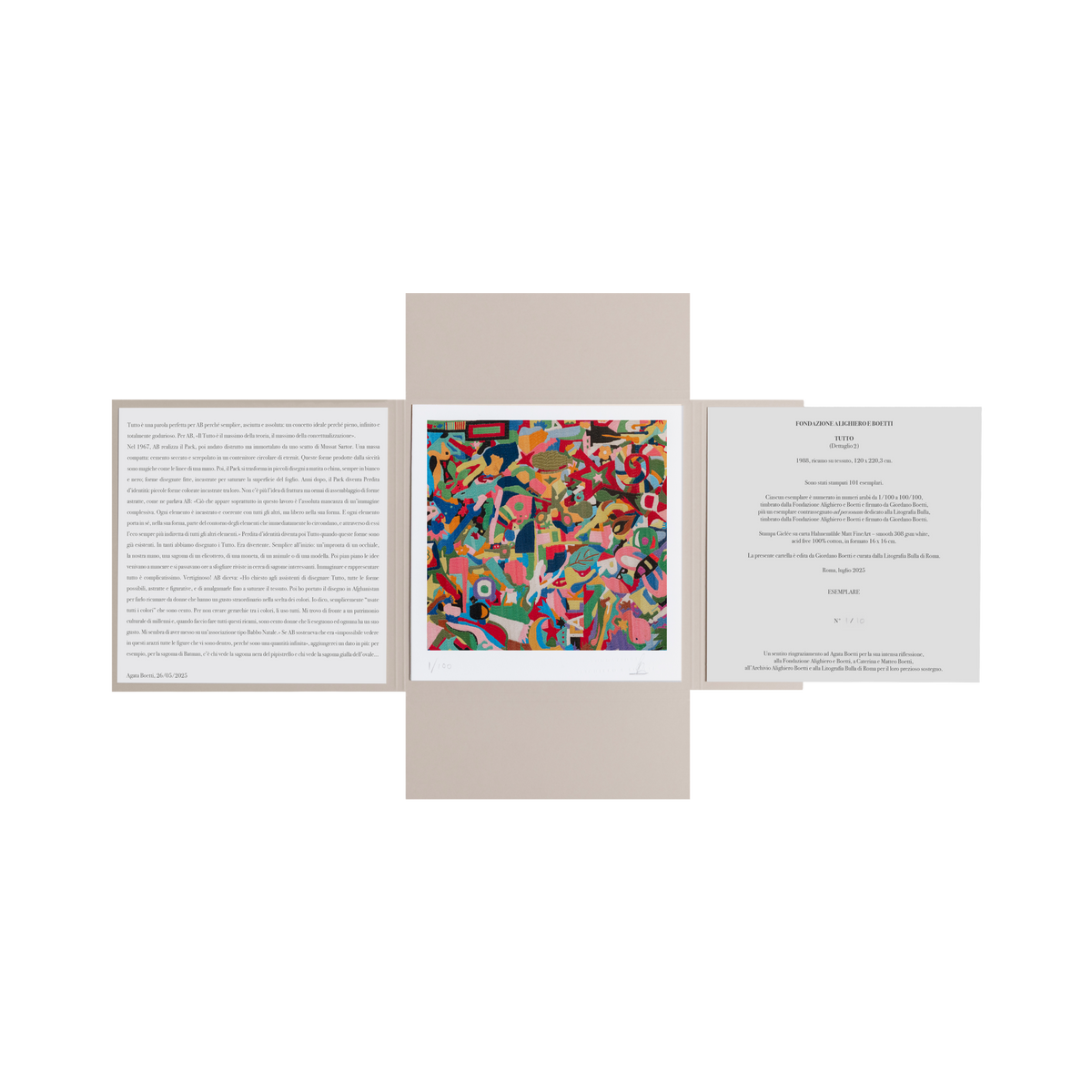
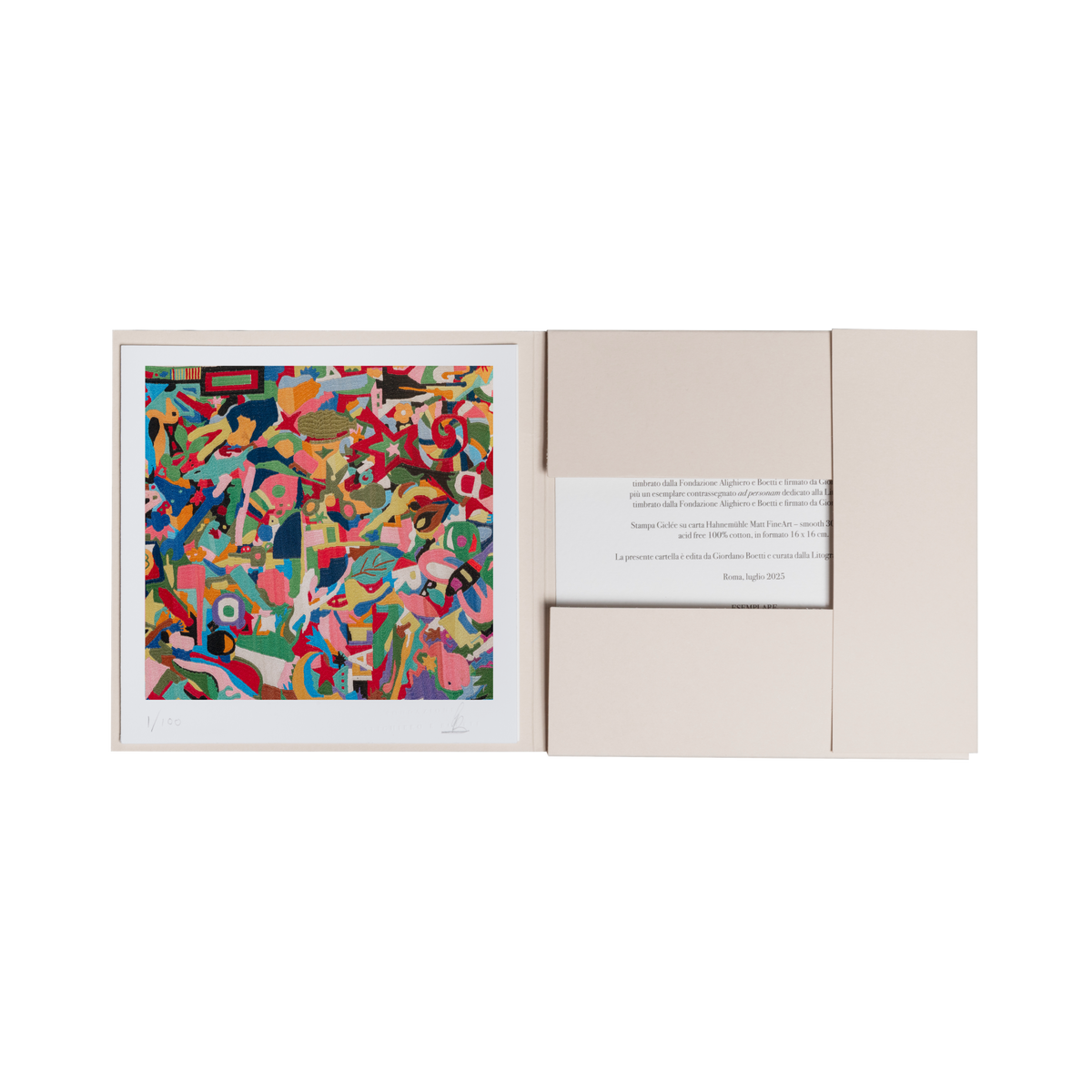
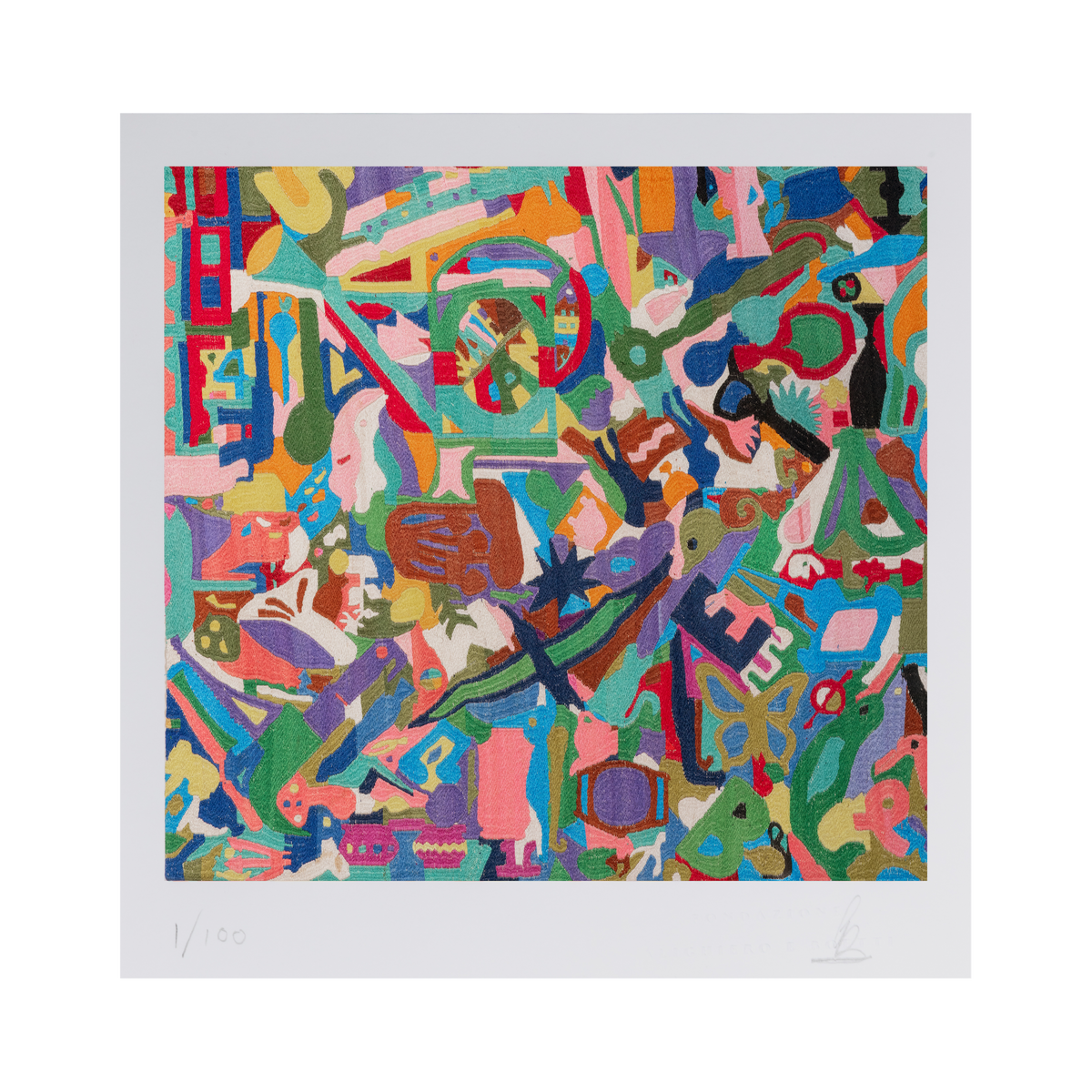
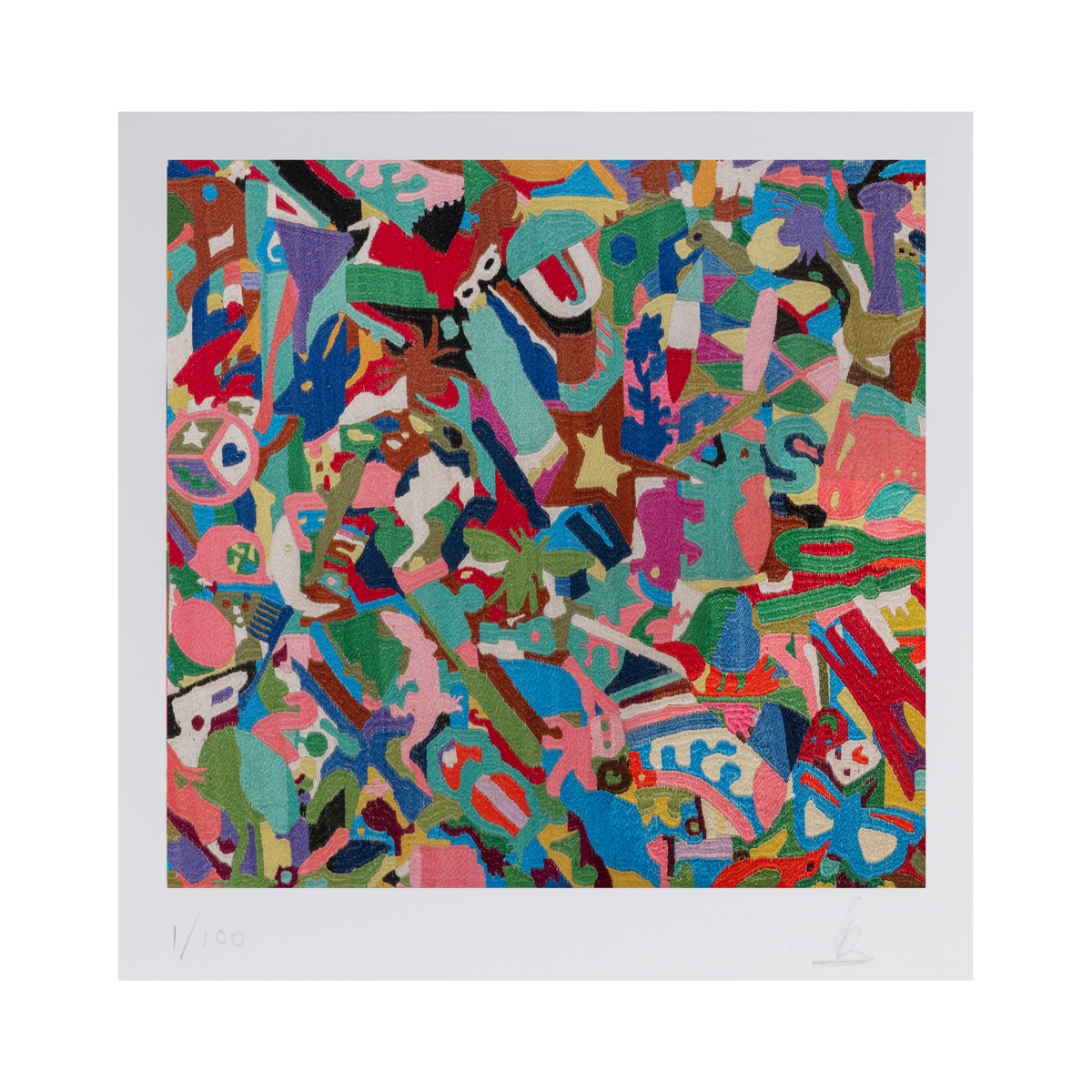
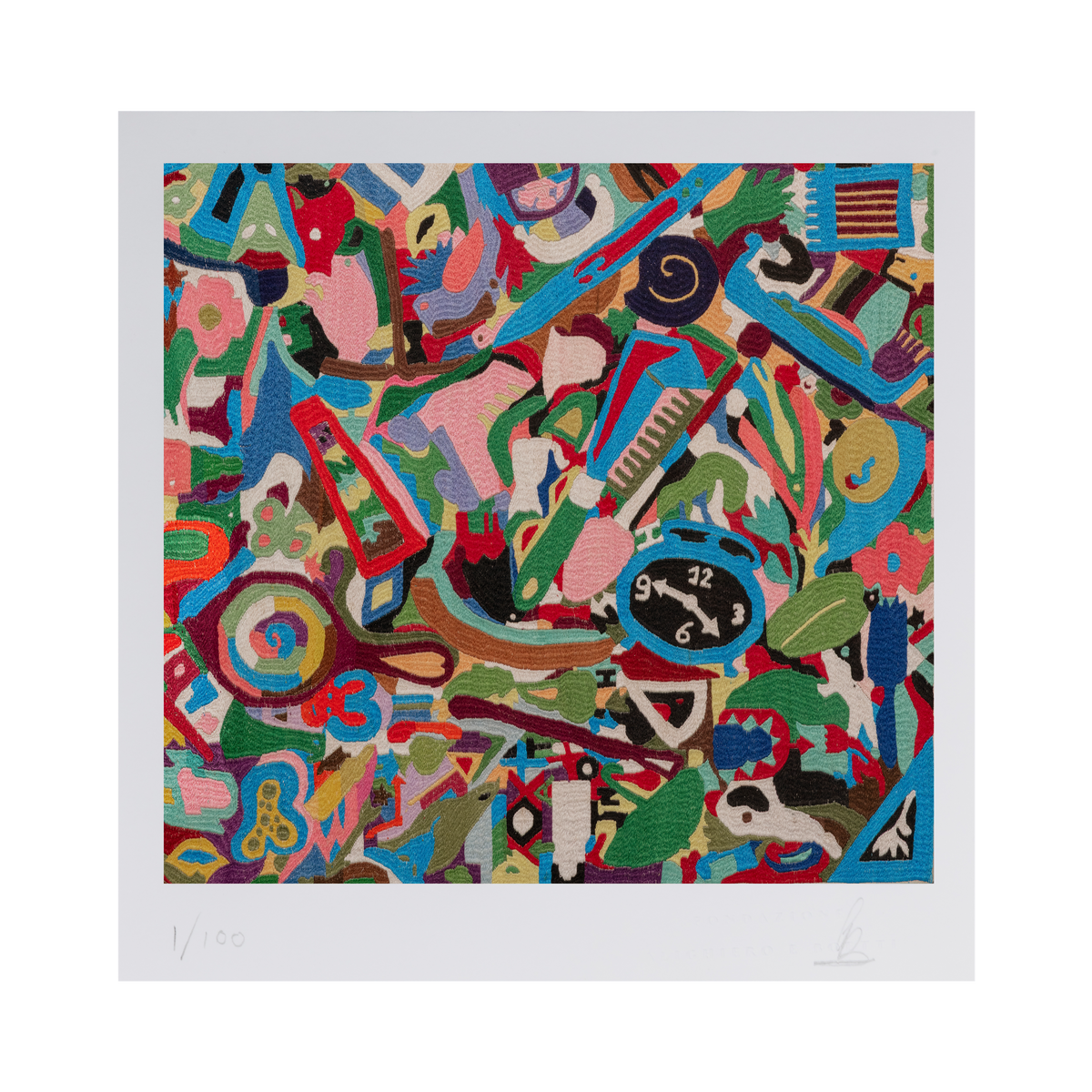
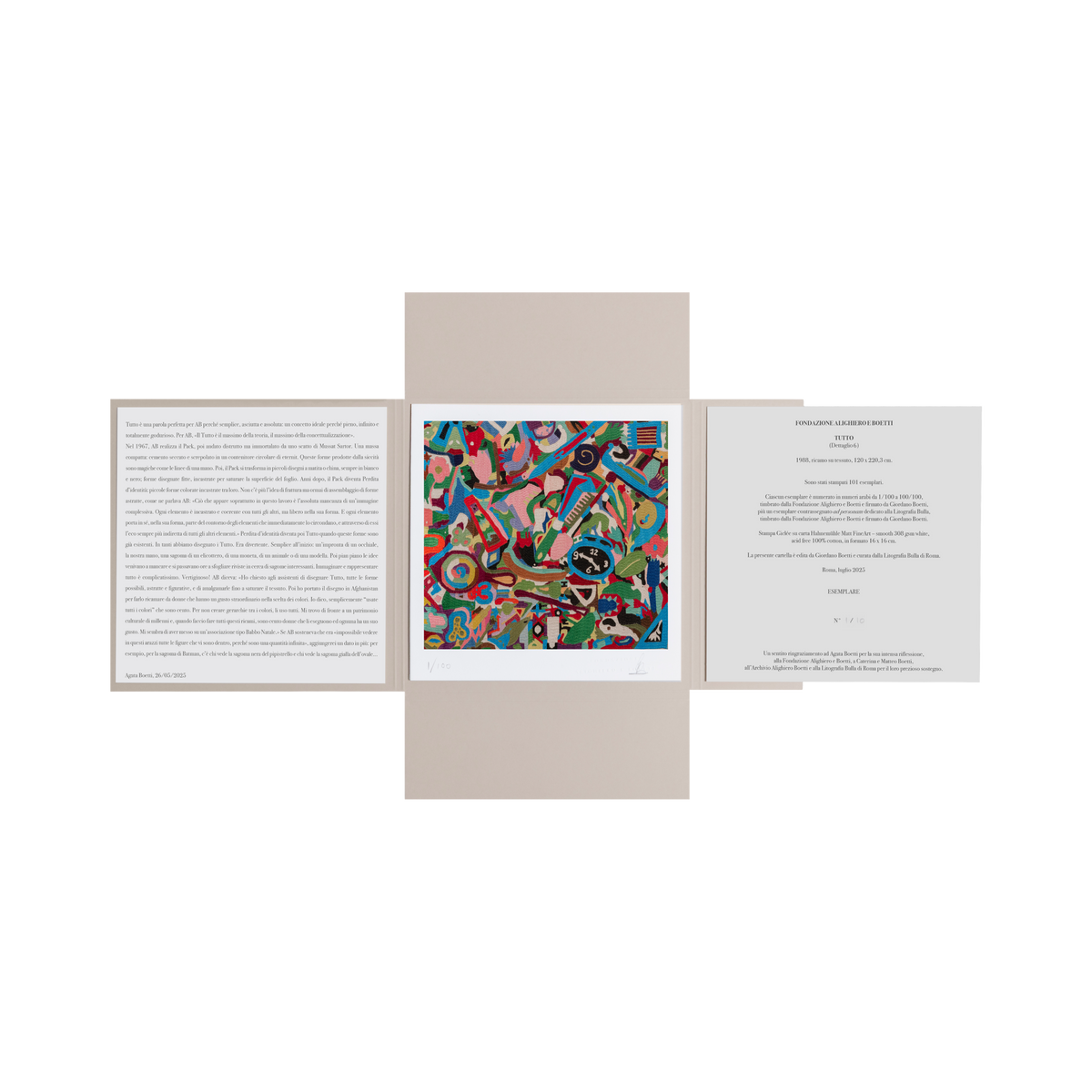
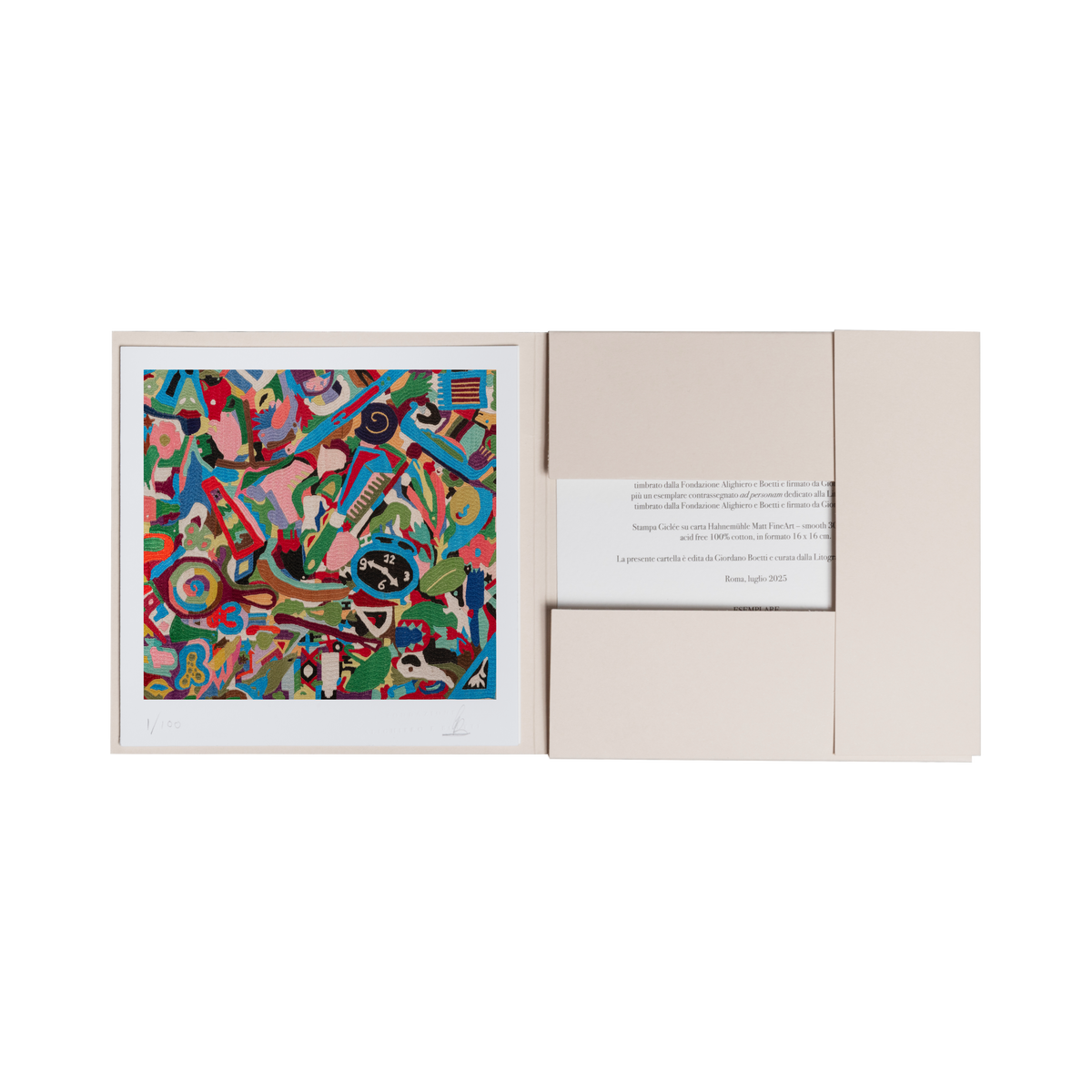
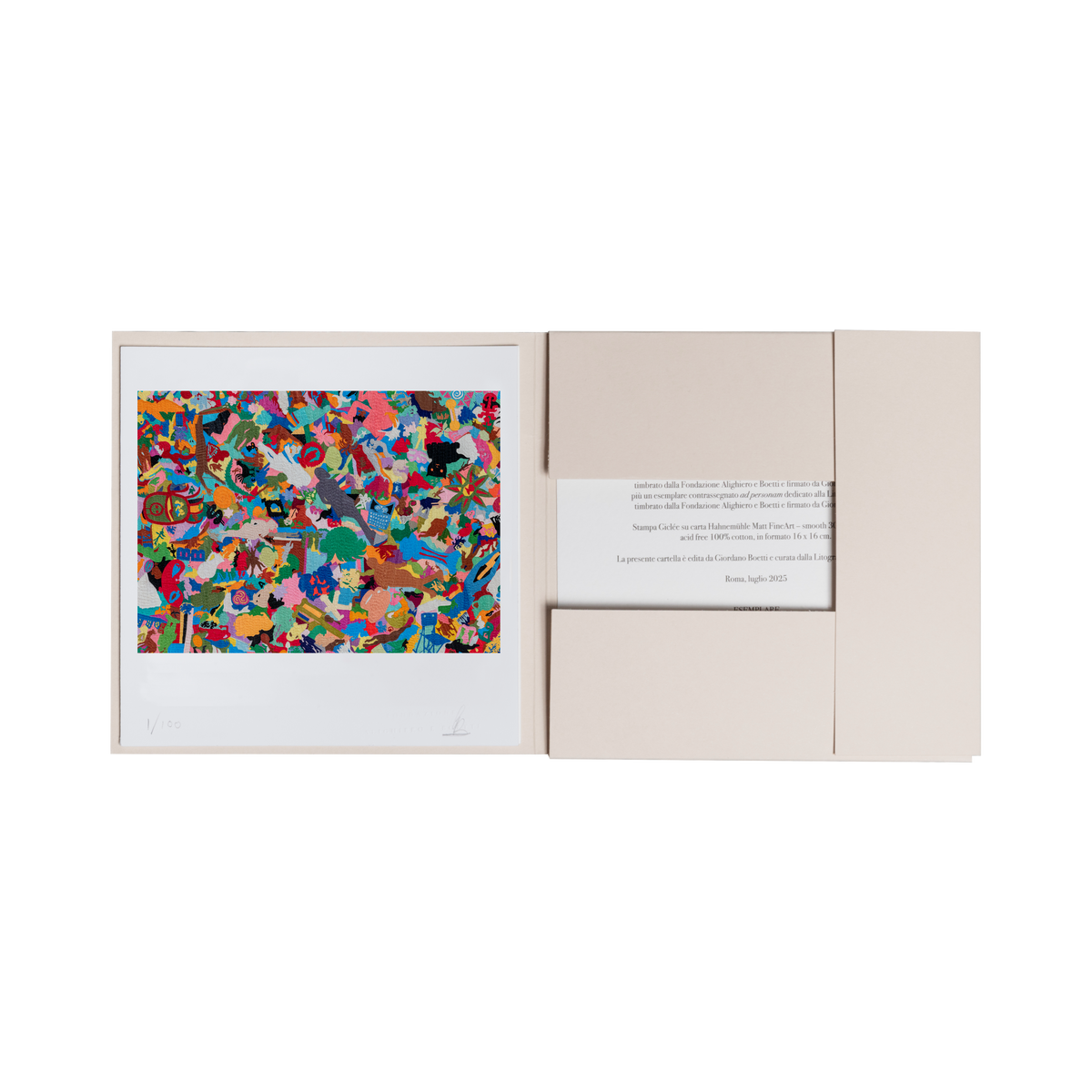
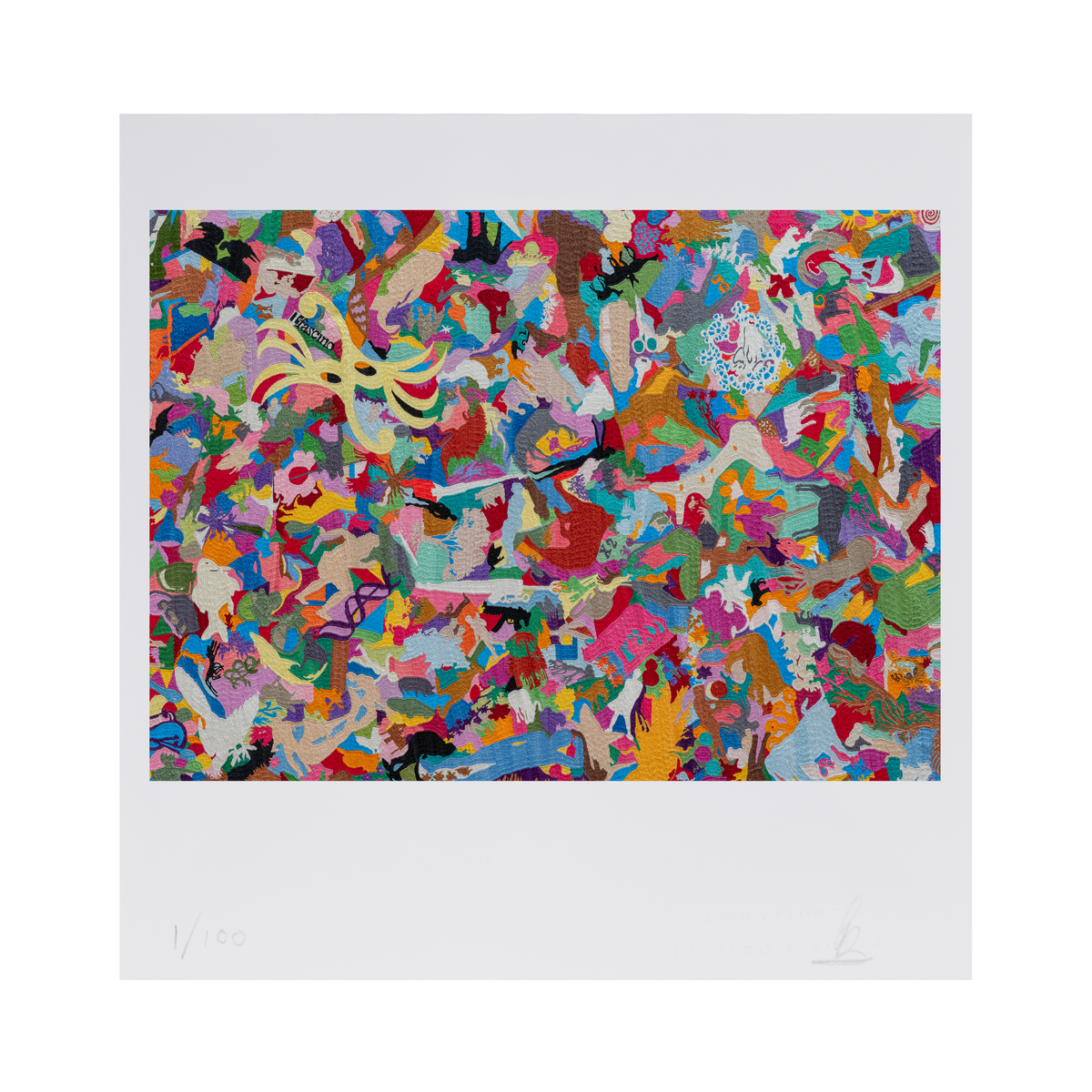
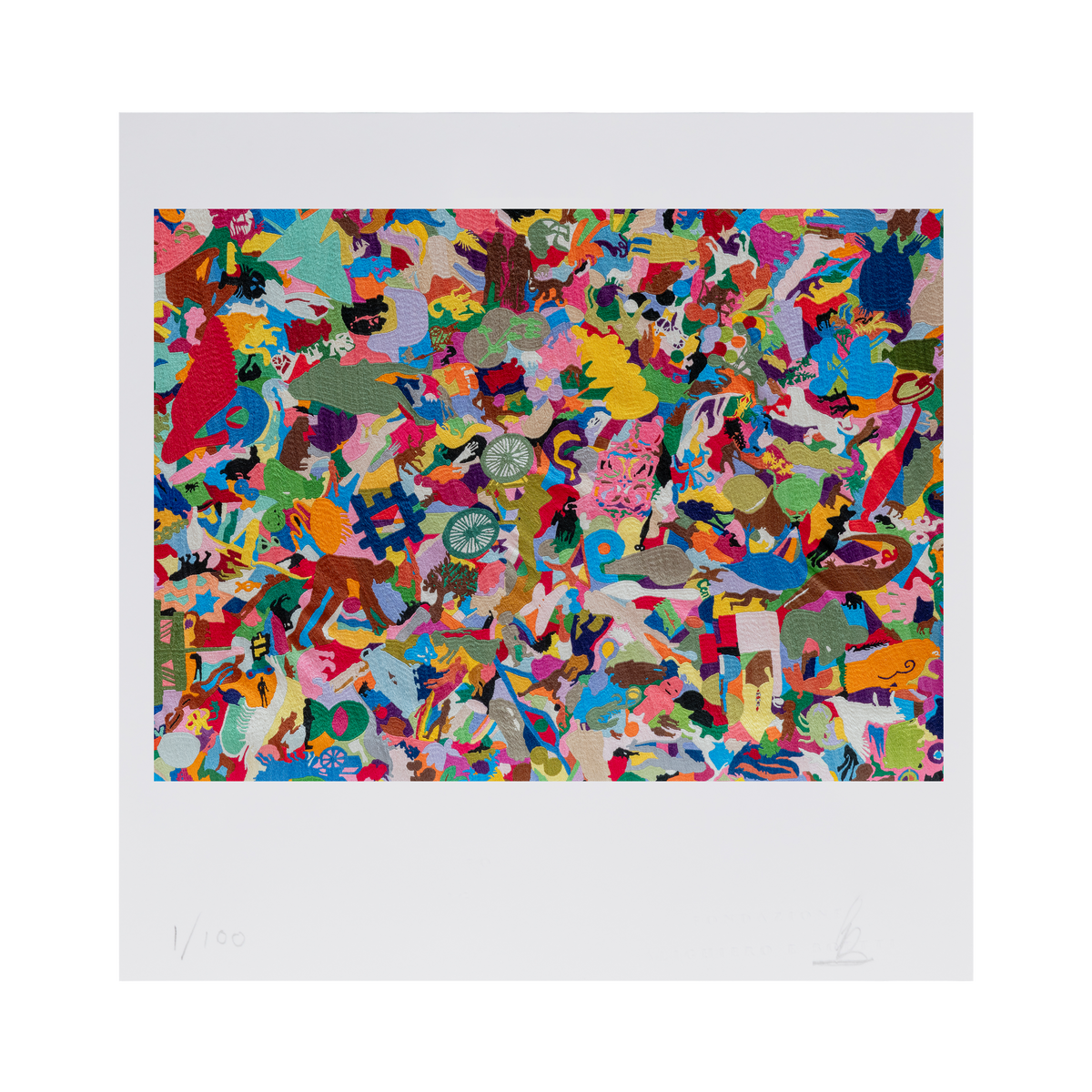
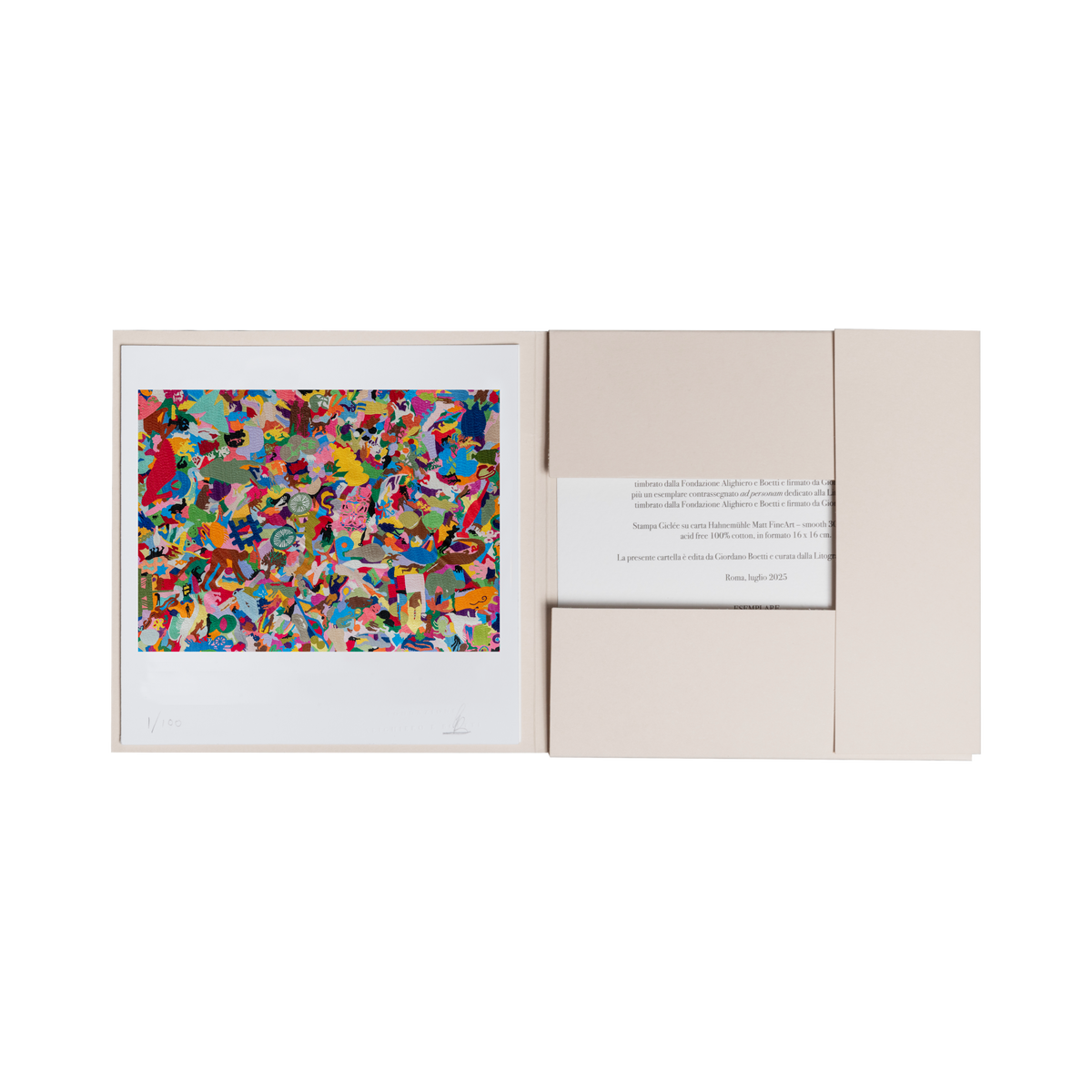
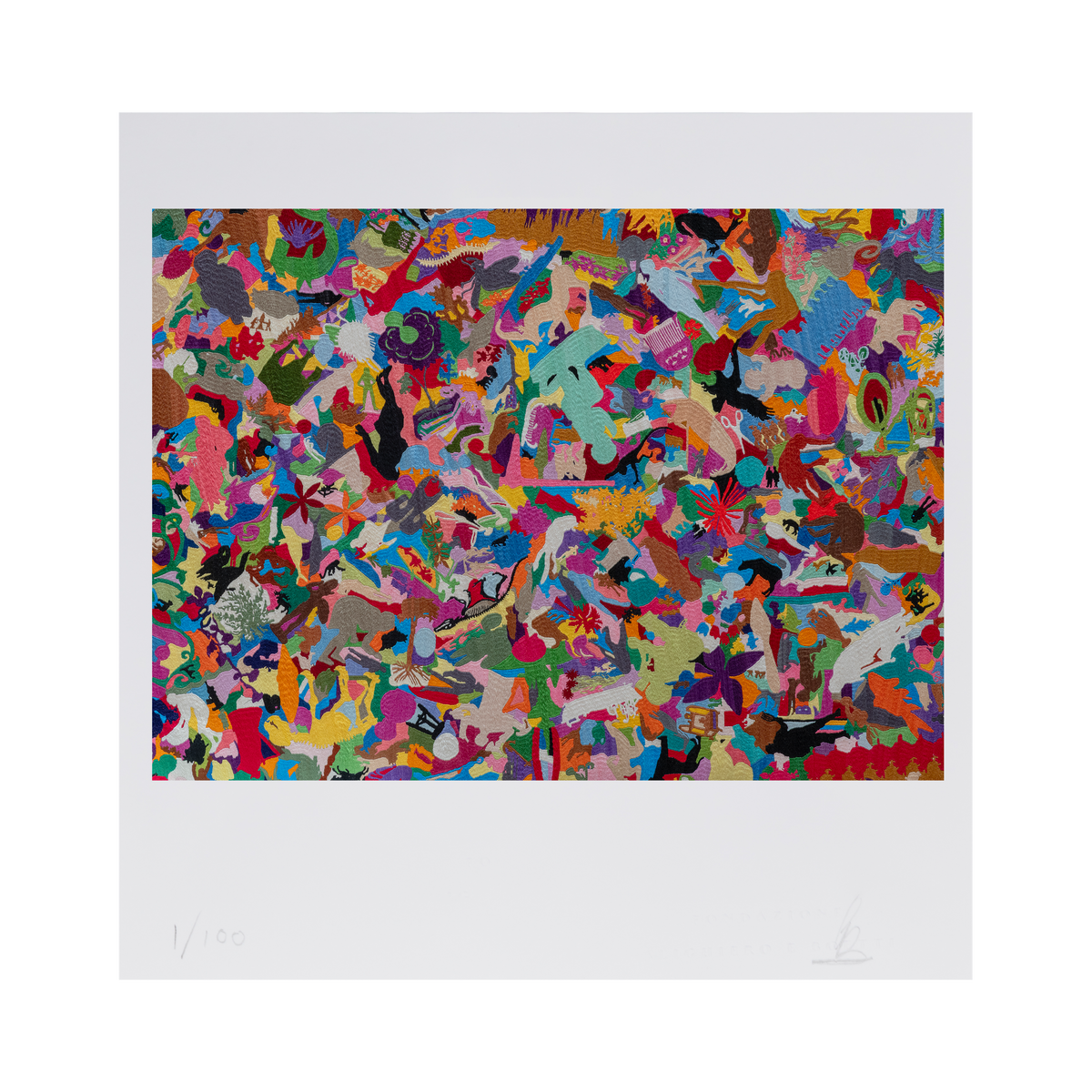
Tutto (1988 120 x 220.3 cm) Detail_3, 2025
Fondazione Alighiero e Boetti
Tutto (1988 120 x 220.3 cm) Detail 3, 2025
Giclée print on Hahnemühle Matt FineArt Smooth 308 gsm white paper, acid-free, 100% cotton
6 3/10 × 6 3/10 in 16 × 16 cm
Edition + 1 AP
Couldn't load pickup availability
Pickup available at Via dei Coronari 210, 00186 Roma
Usually ready in 2-4 daysALIGHIERO BOETTI
ALIGHIERO E BOETTI FOUNDATION
TUTTO
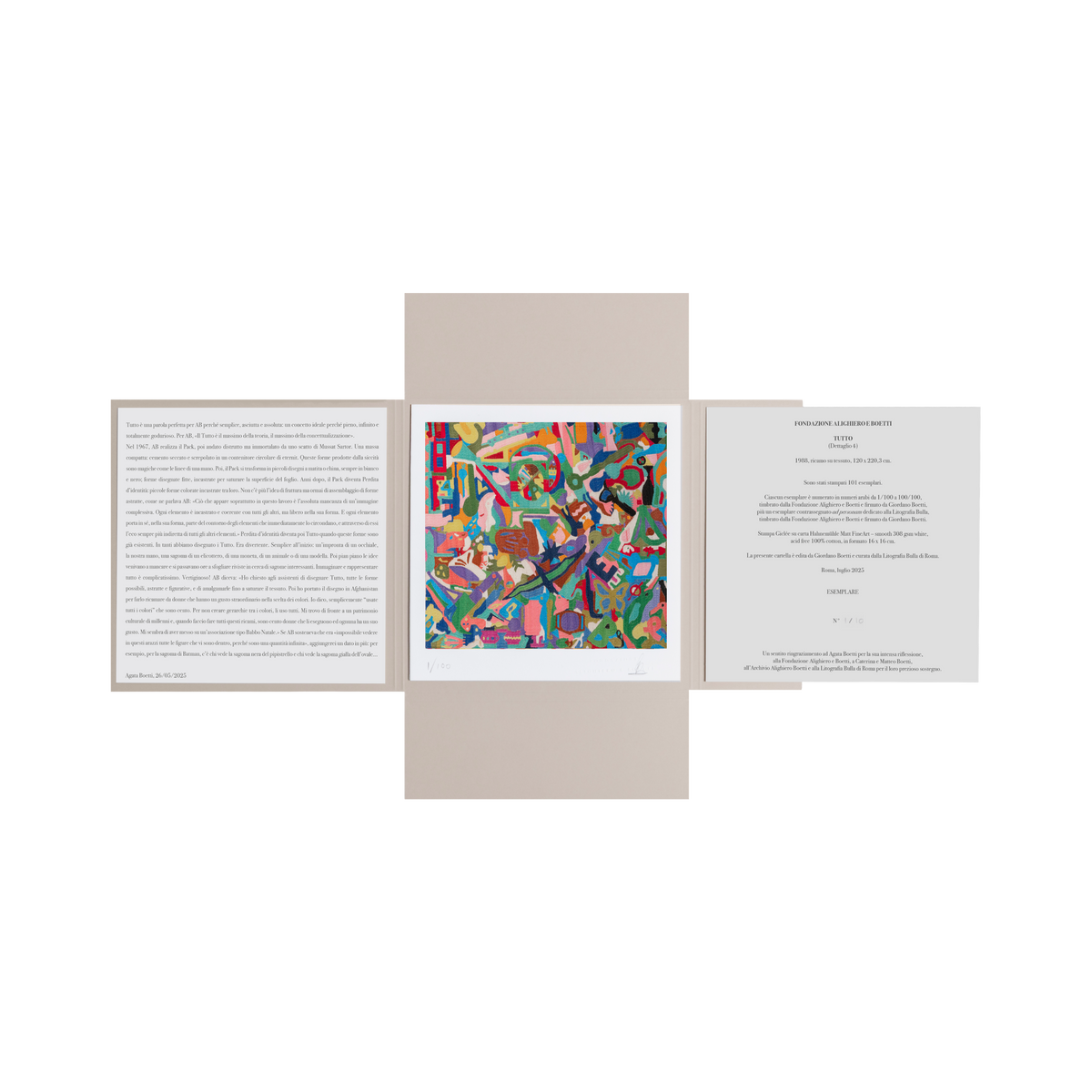
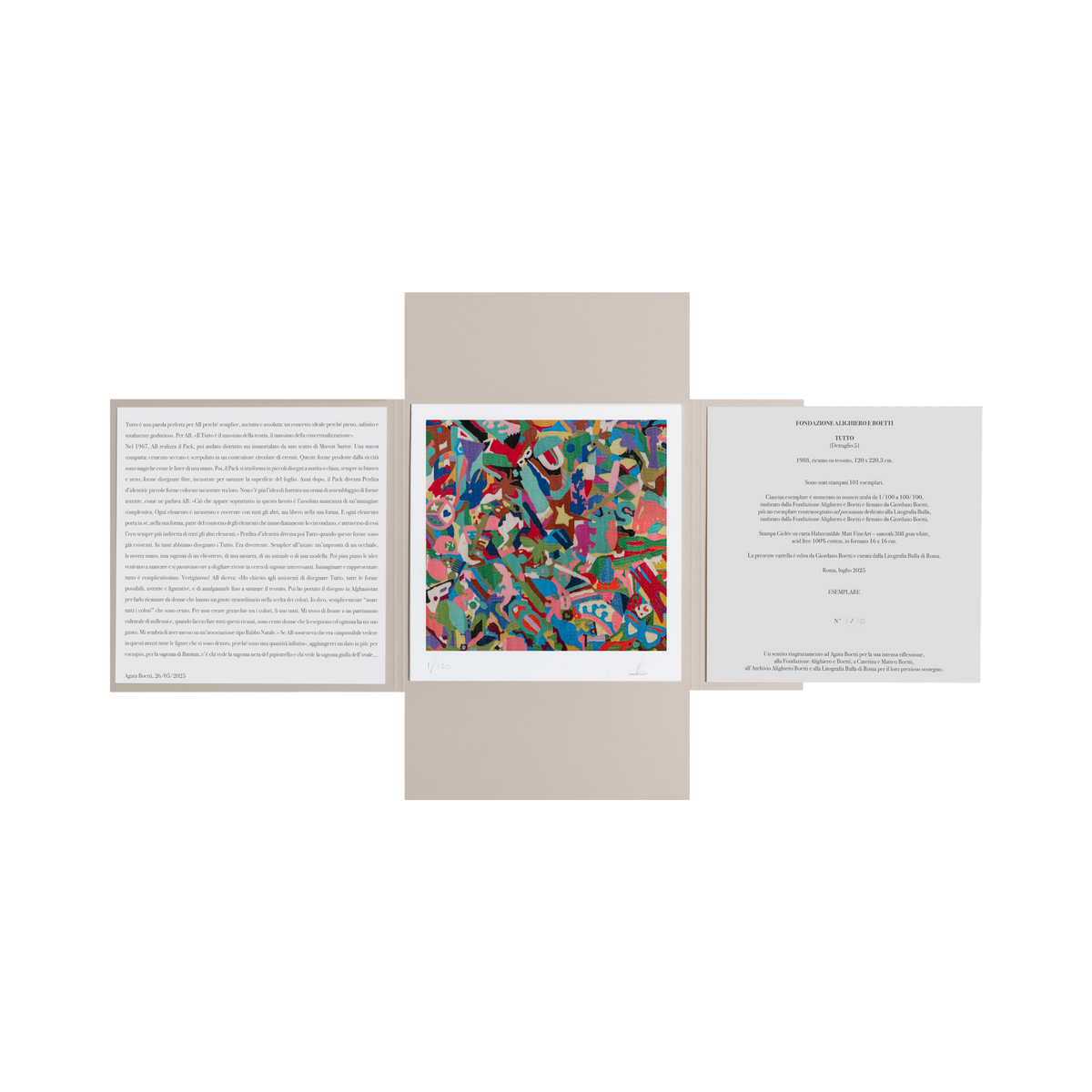
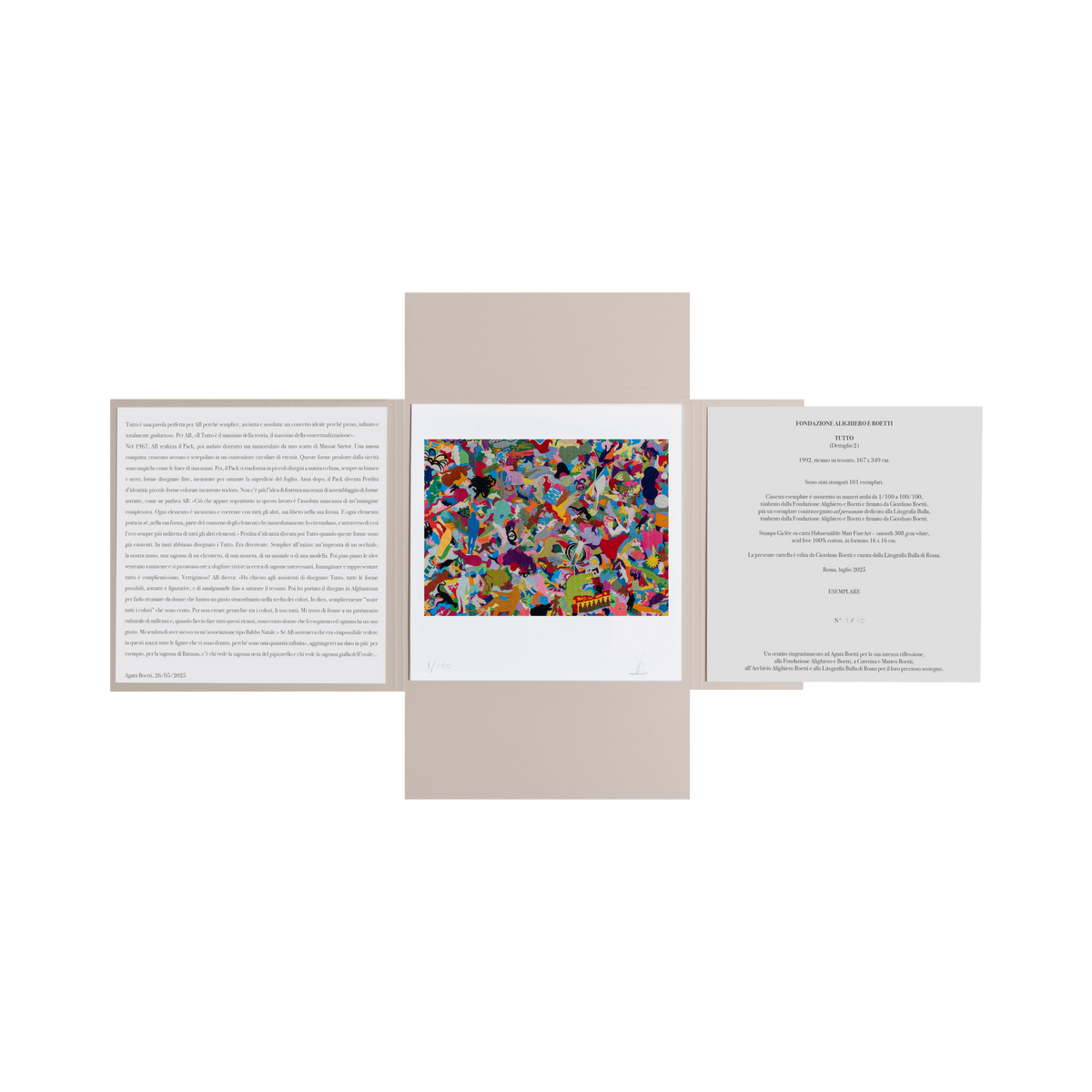
Two works by the artist have been selected for this project:
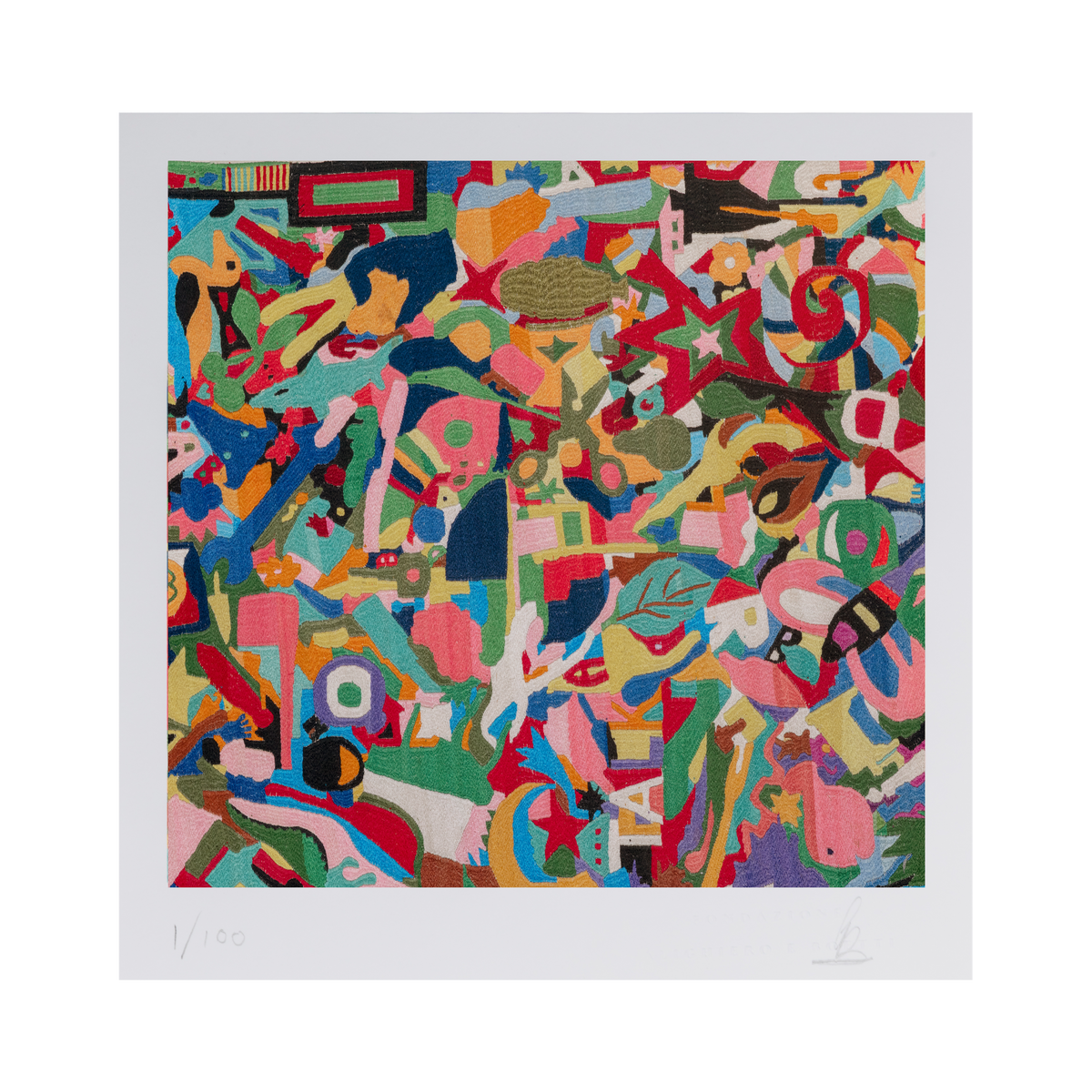
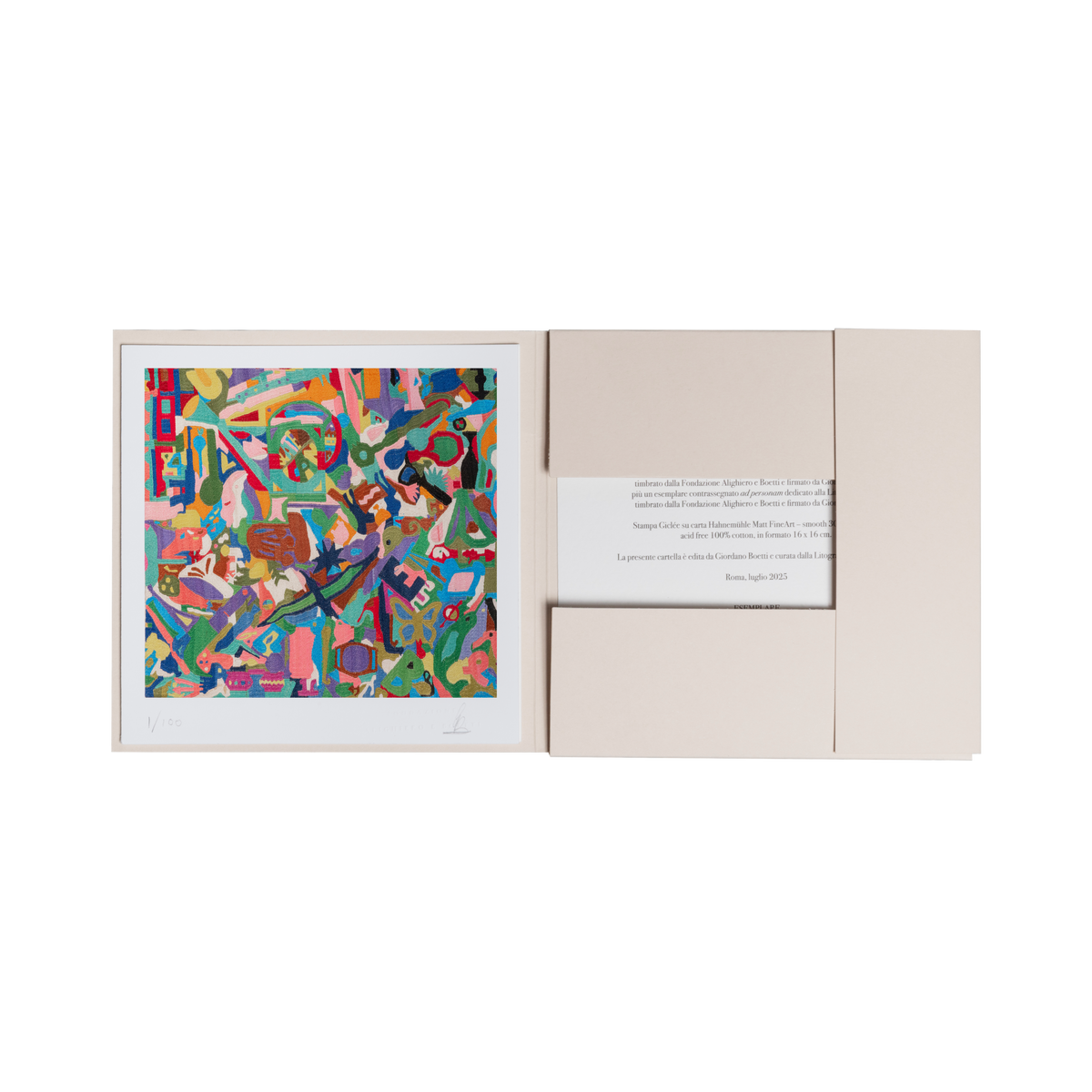
Tutto, 1988, embroidery on fabric, 120 × 220.3 cm
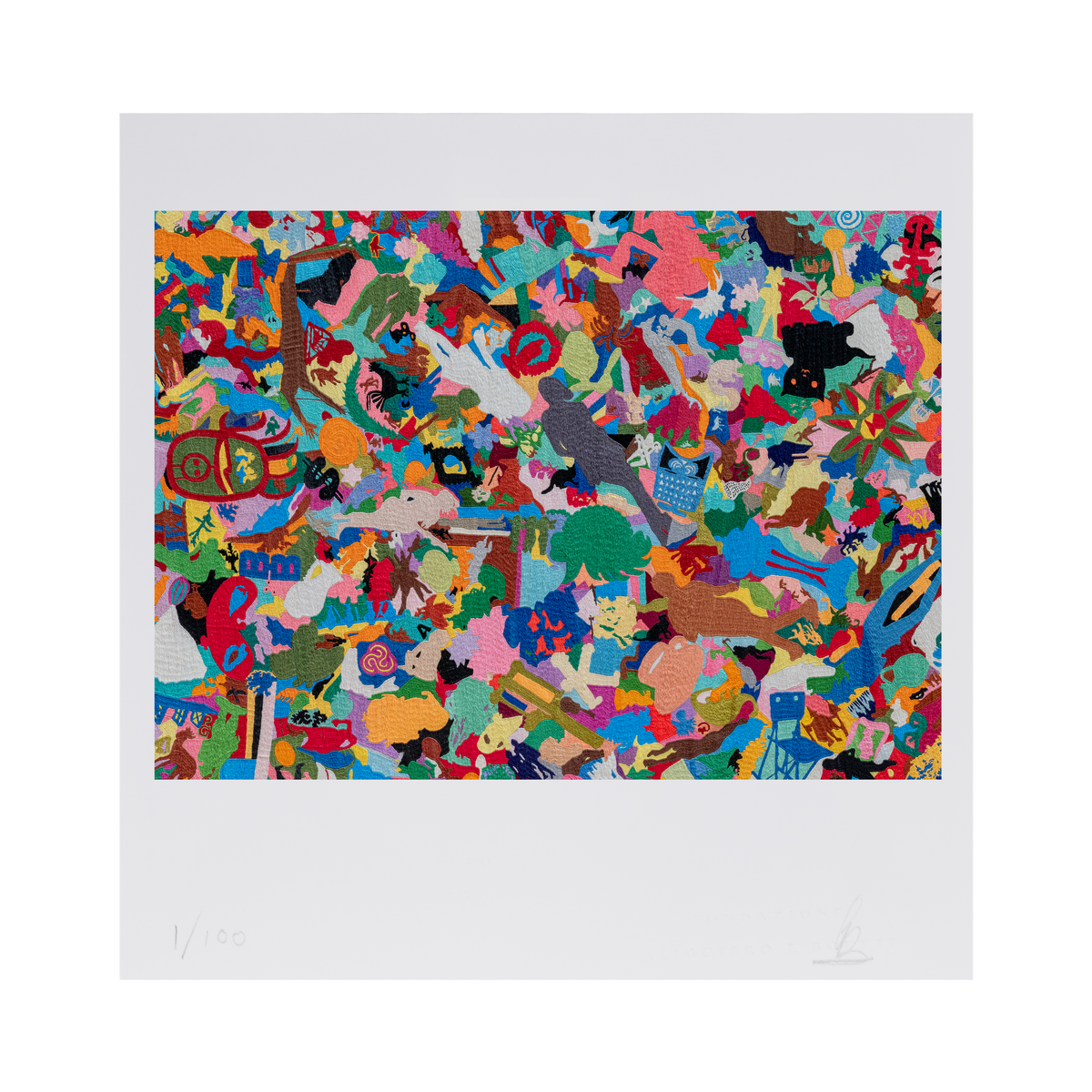
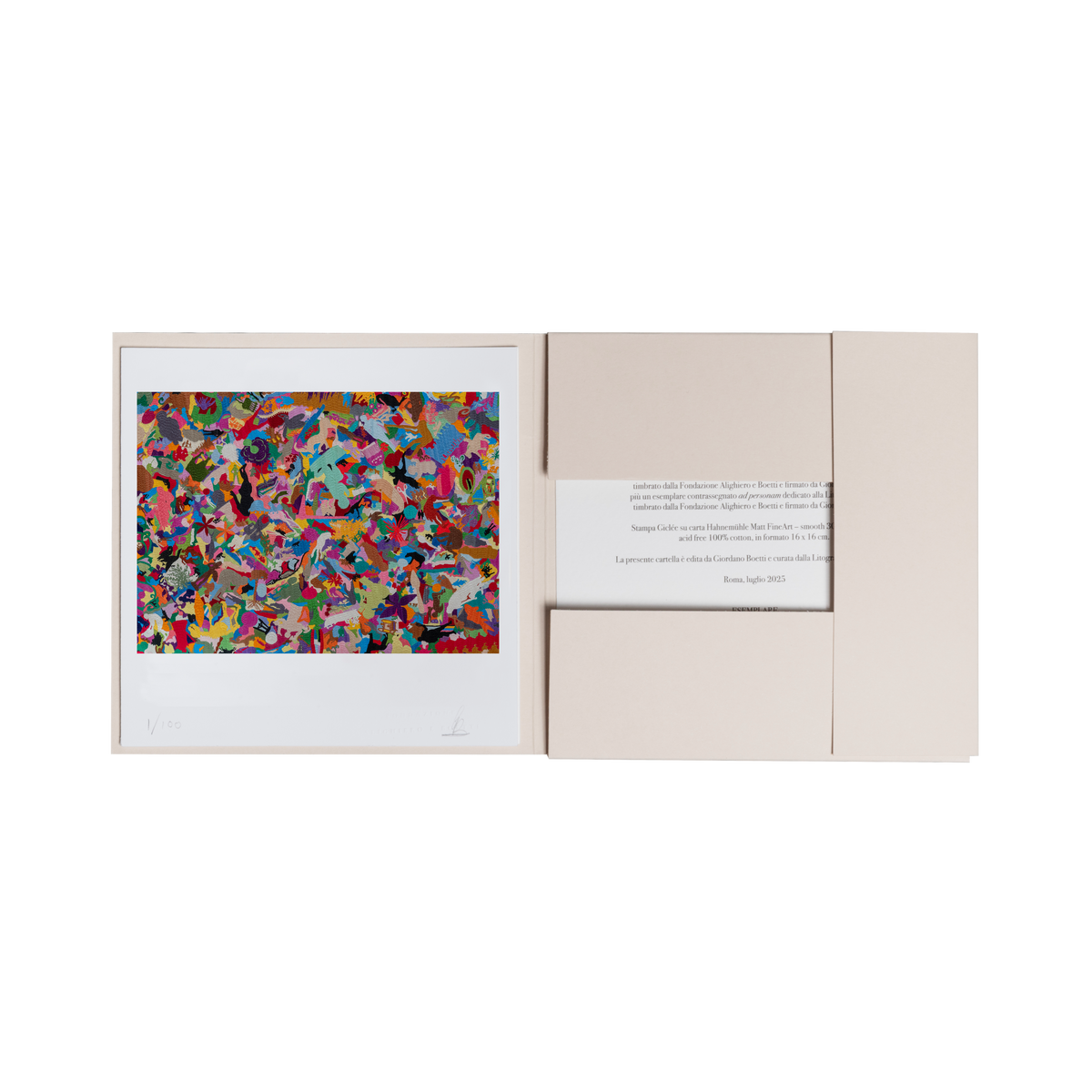
Tutto, 1992, embroidery on fabric, 167 × 349 cm.
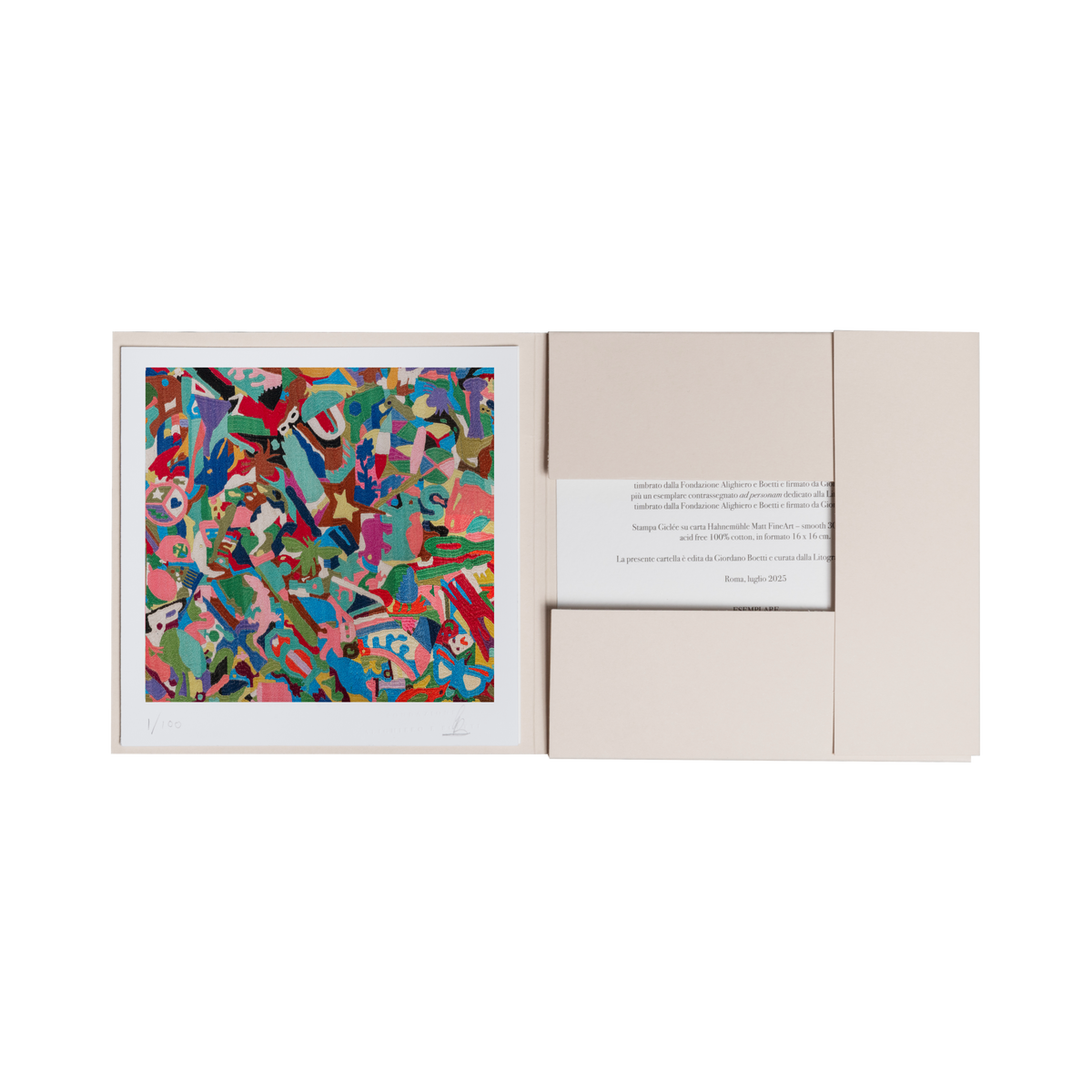
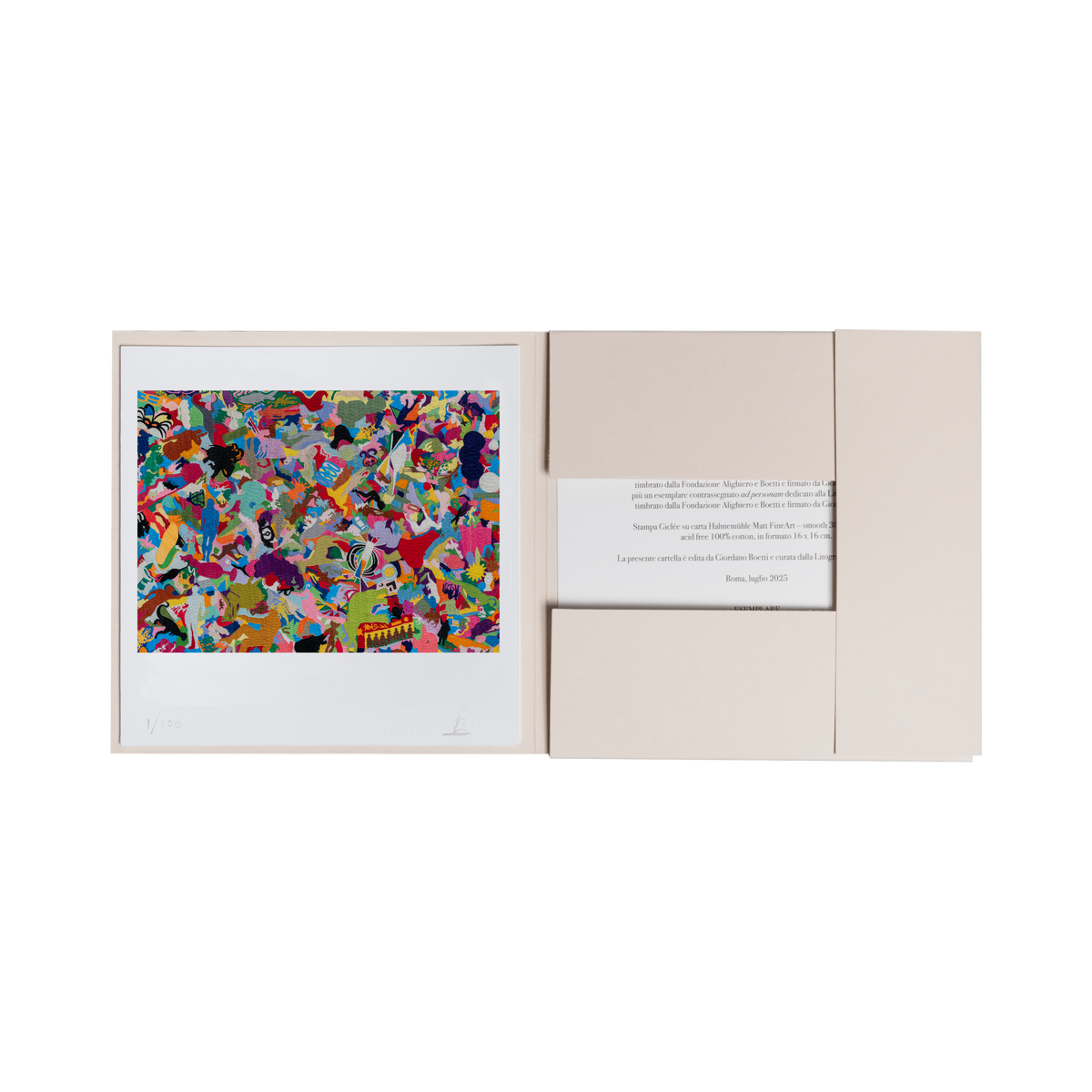
The two works have been broken down into six details.
Each detail has been produced in an edition of 100 copies.
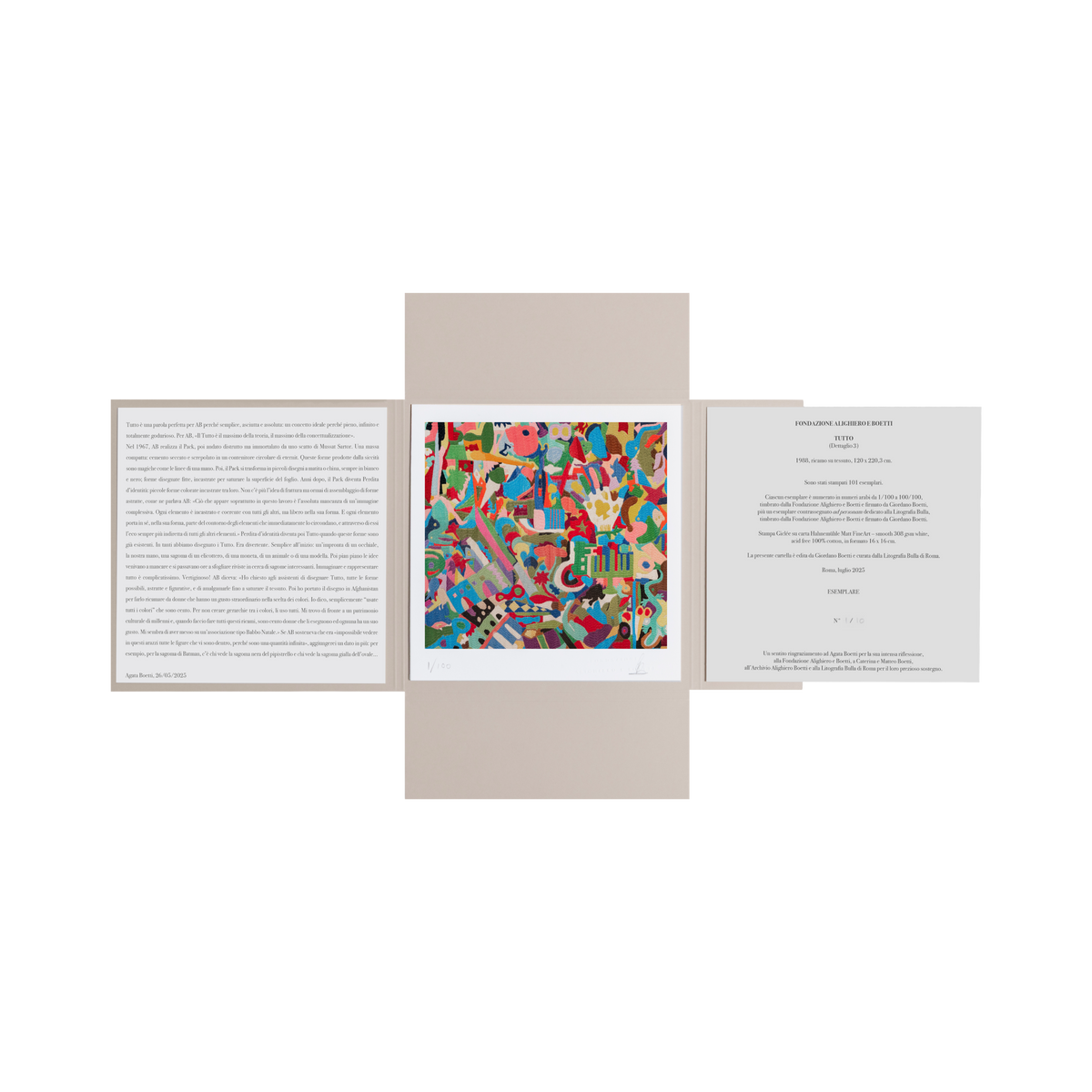
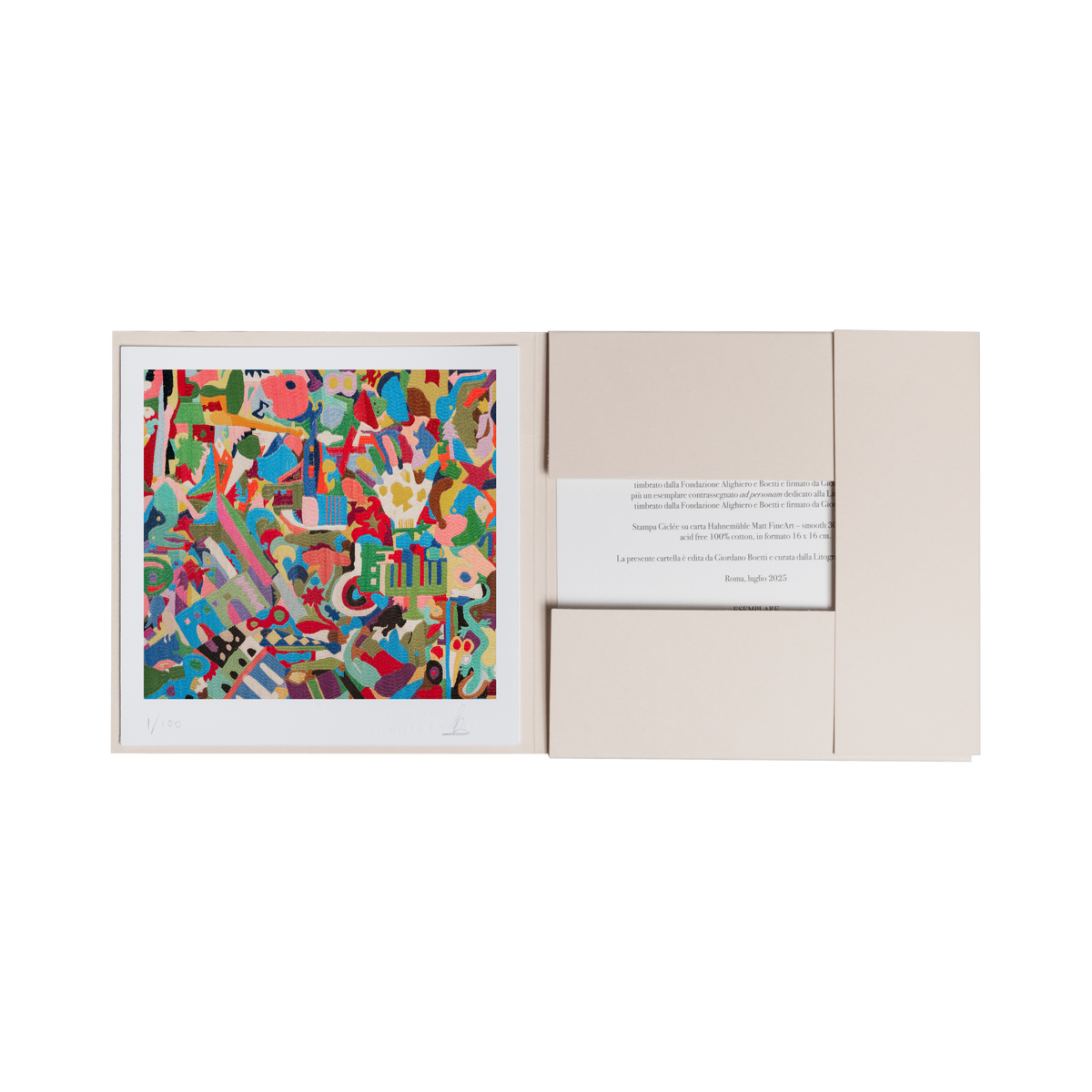
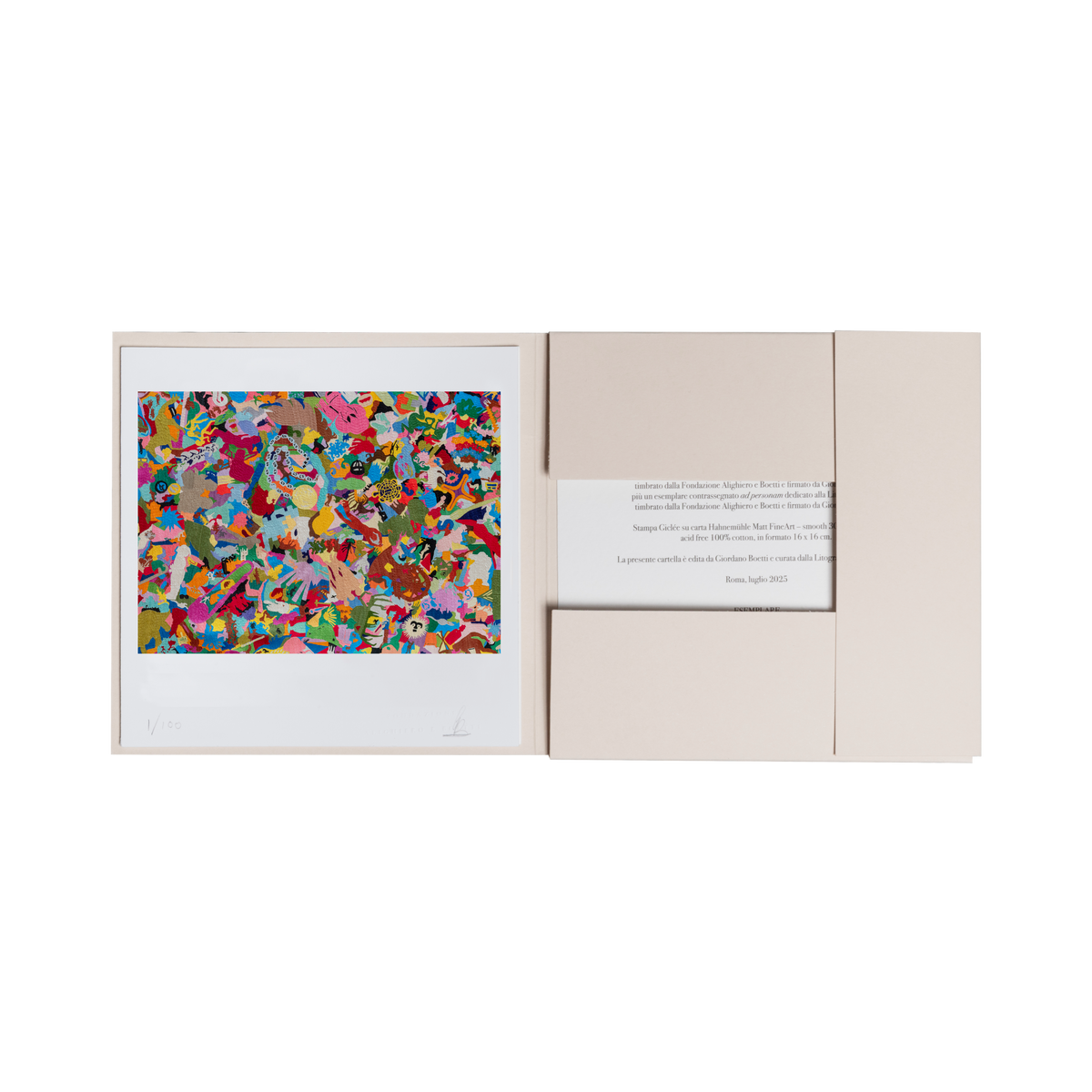
Each copy is numbered in Arabic numerals from 1/100 to 100/100, stamped by the Alighiero e Boetti Foundation and signed by Giordano Boetti, plus one copy marked ad personam dedicated to Litografia Bulla.
Giclée print on Hahnemühle Matt FineArt – smooth 308 gsm white paper, acid-free, 100% cotton, in 16 × 16 cm format.
This portfolio is published by Giordano Boetti and curated by Litografia Bulla in Rome.
Rome, July 2025
Heartfelt thanks to Agata Boetti for her profound reflection, to the Alighiero e Boetti Foundation, to Caterina and Matteo Boetti, to the Alighiero Boetti Archive and to Litografia Bulla in Rome for their valuable support.



ALL 1988
DETAILS


ALL 1992
DETAILS
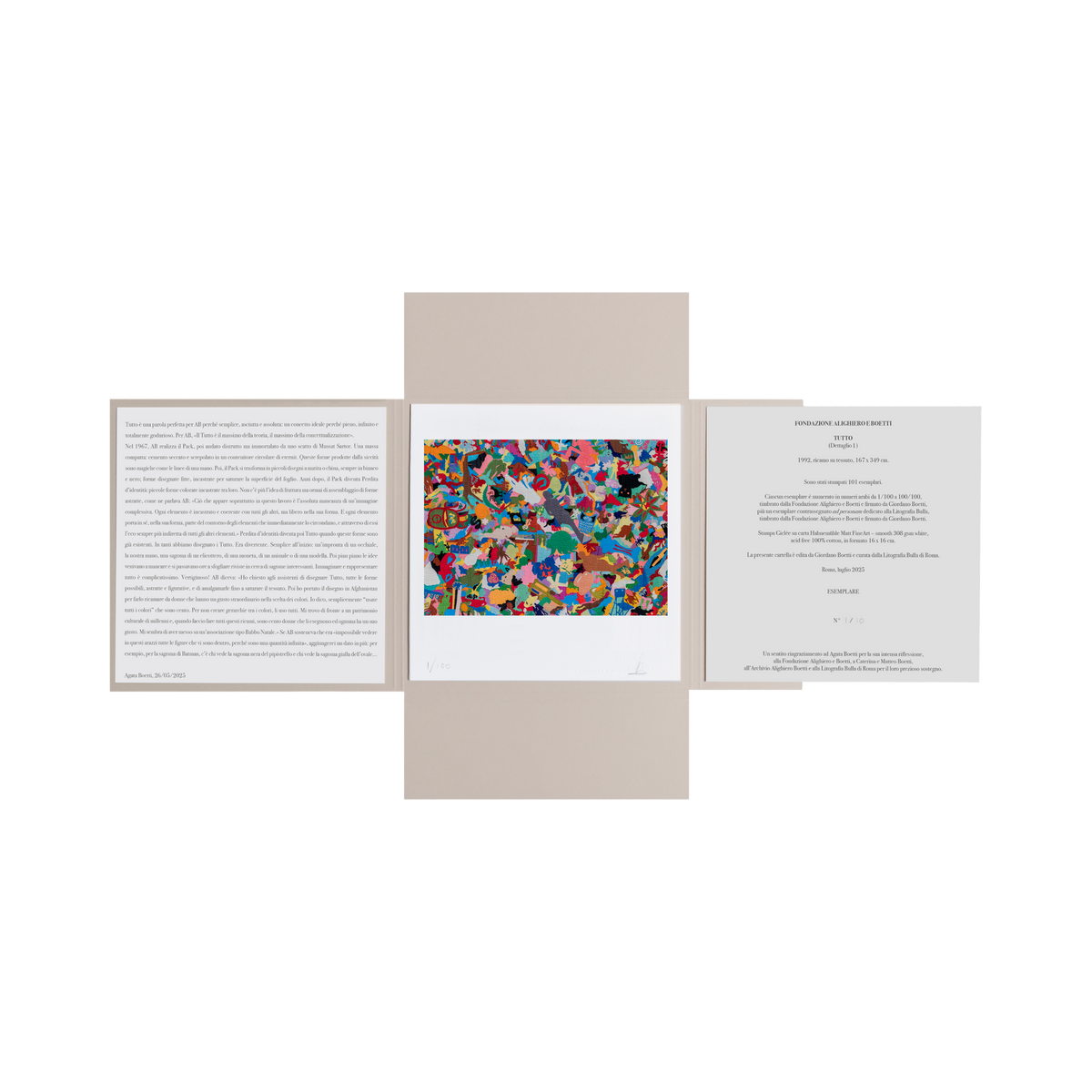
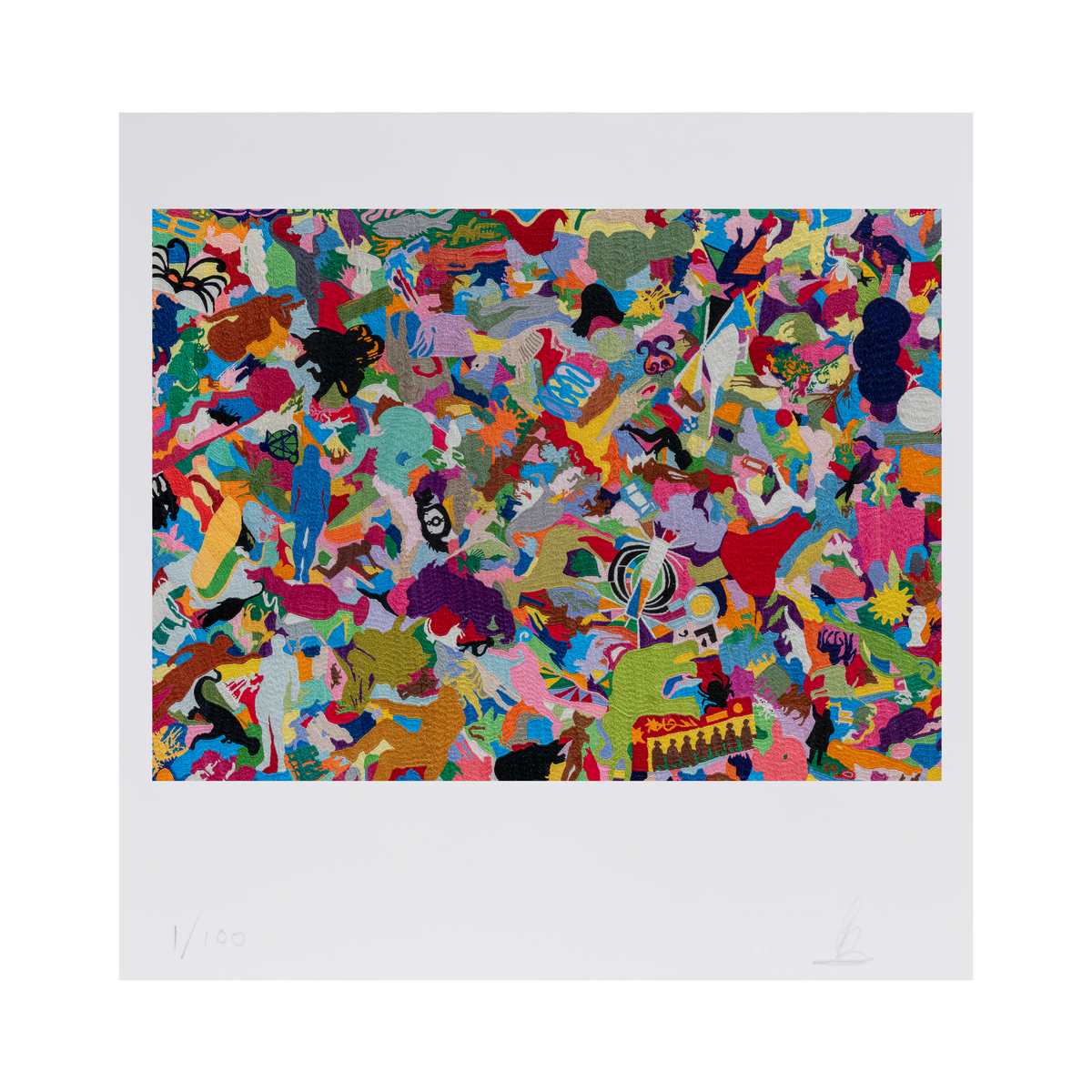
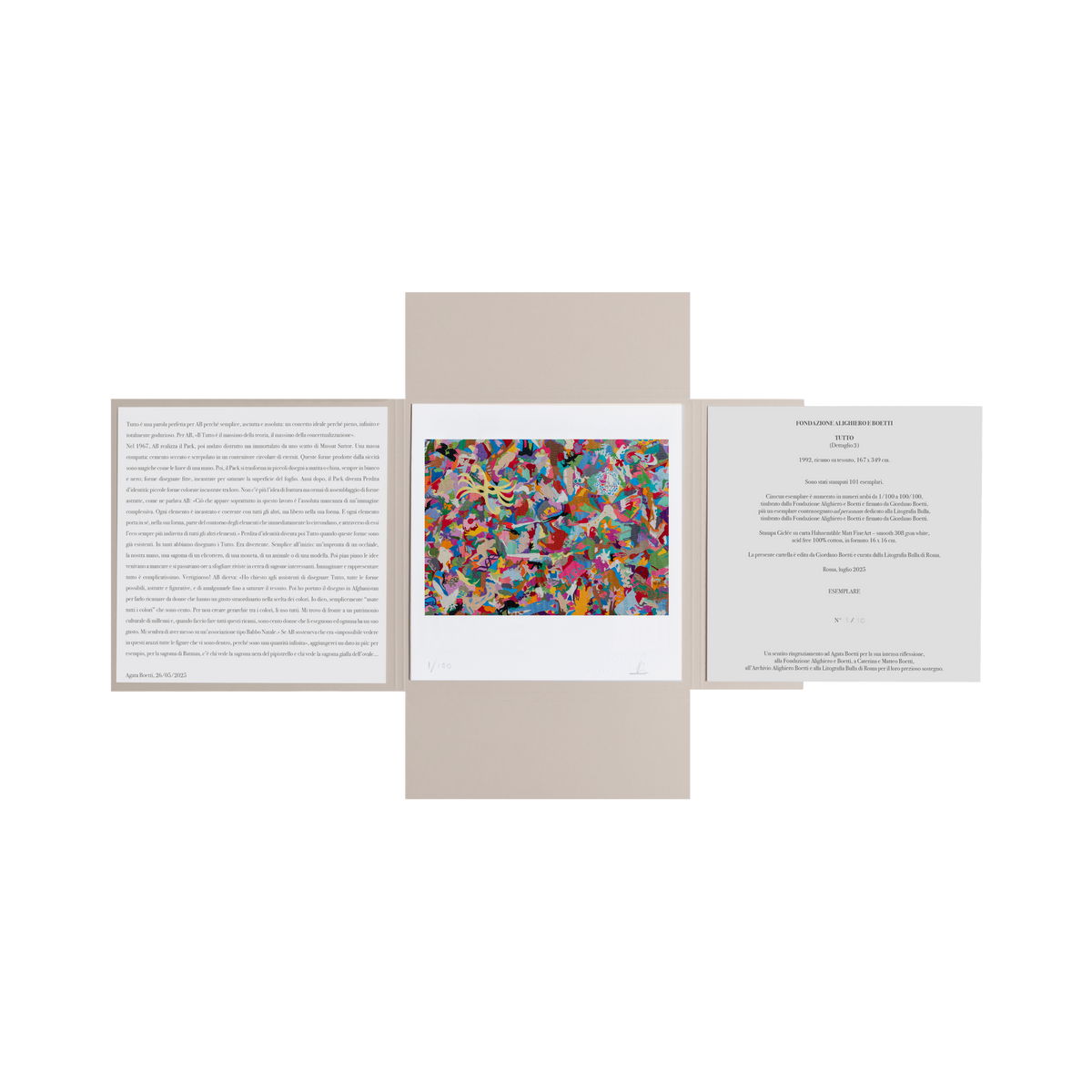
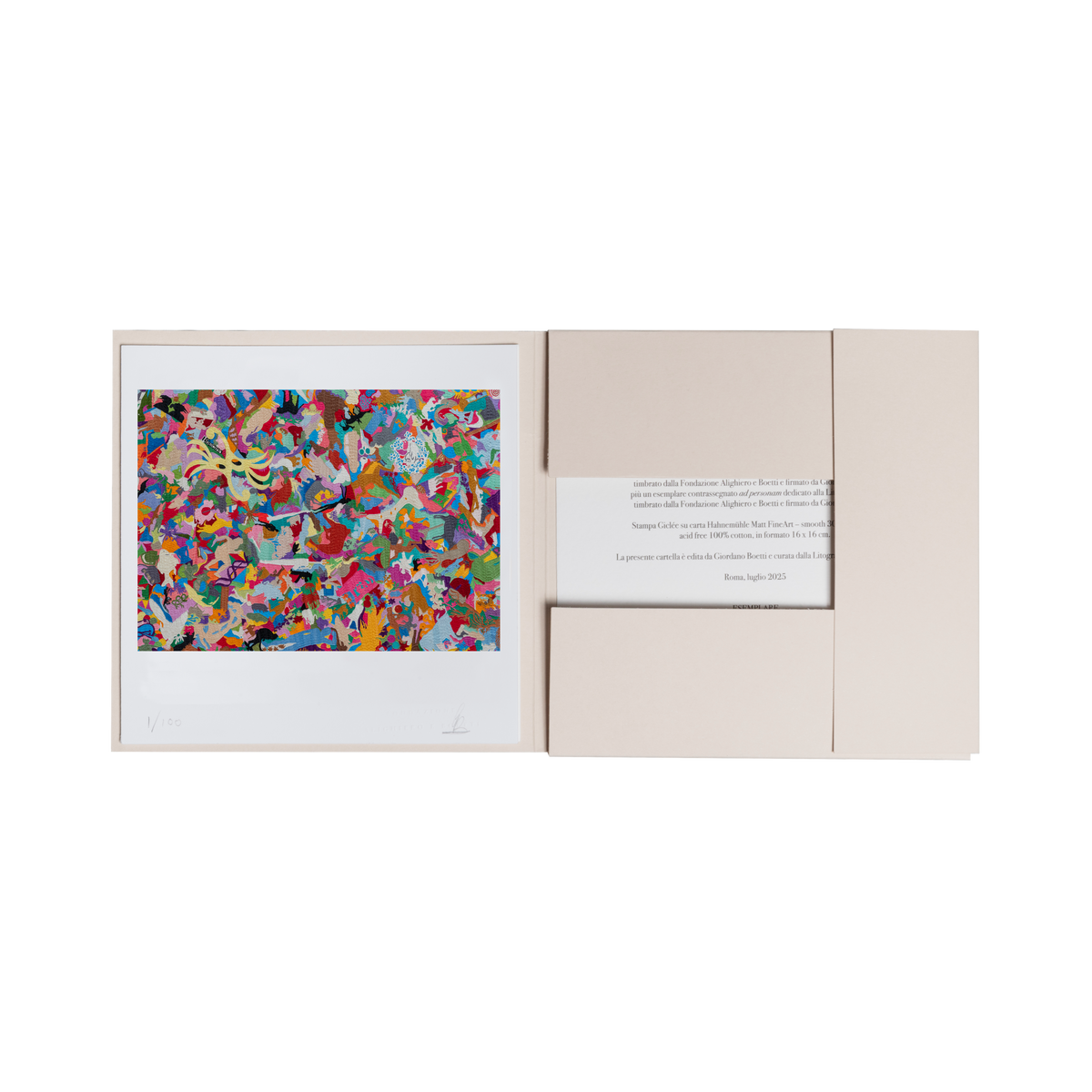
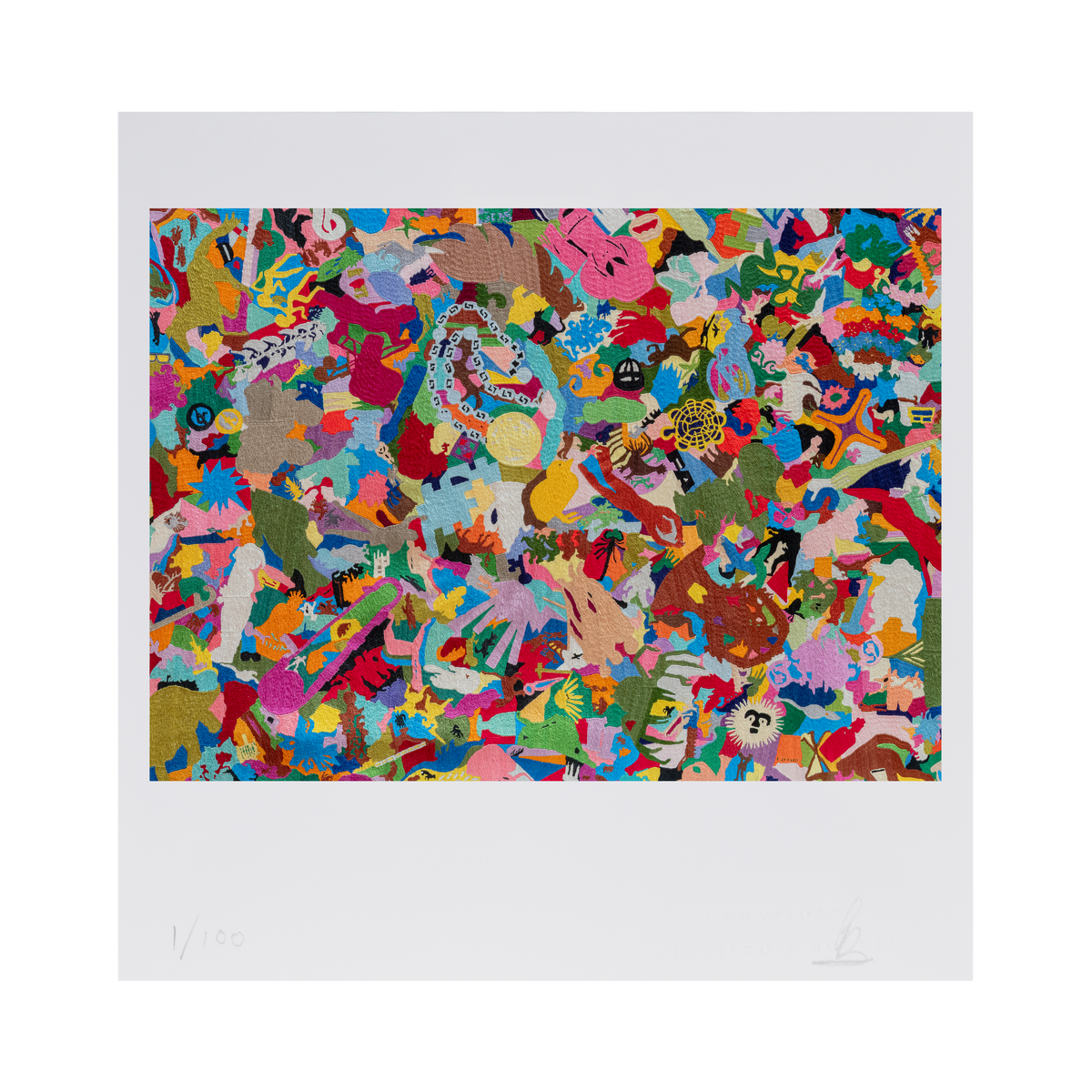
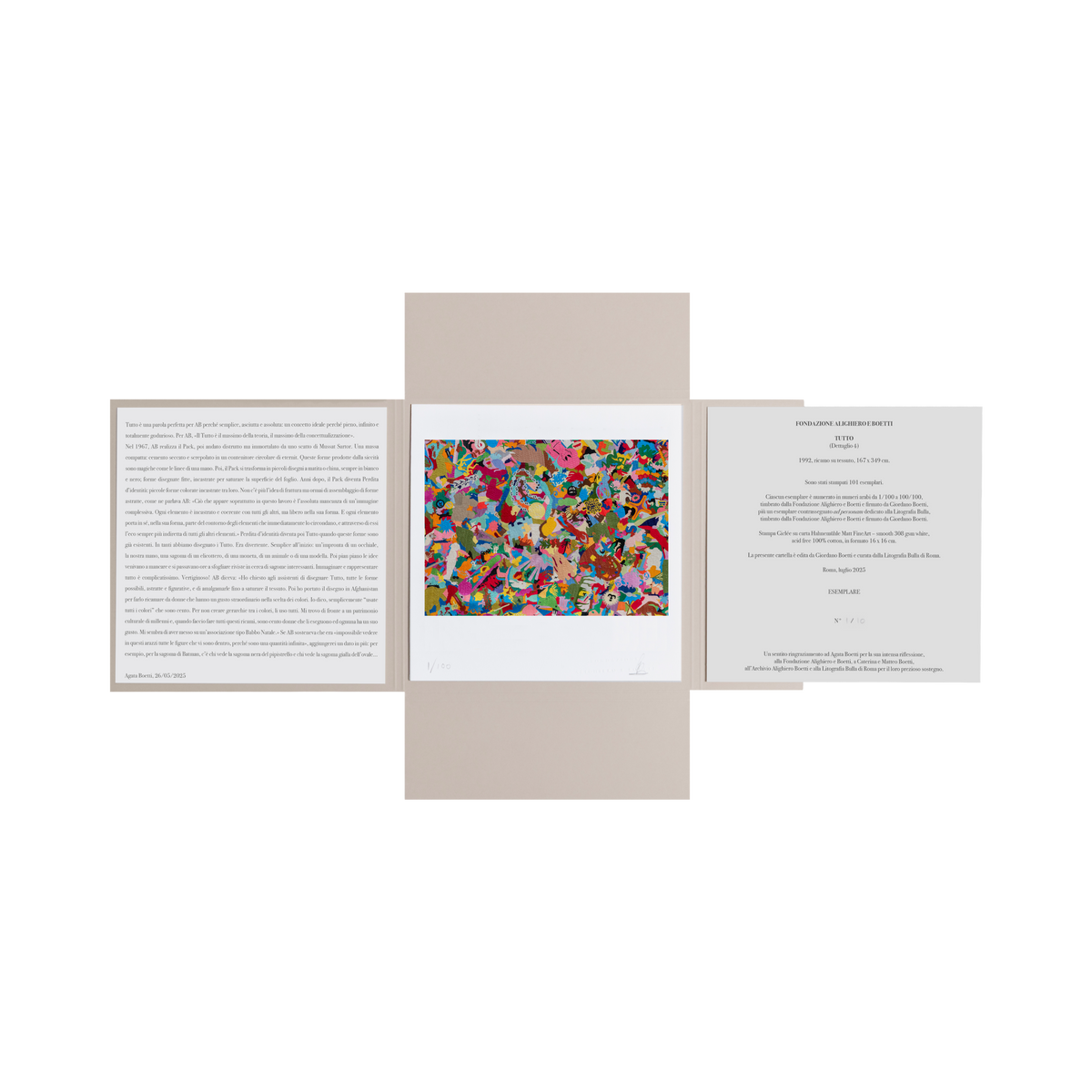
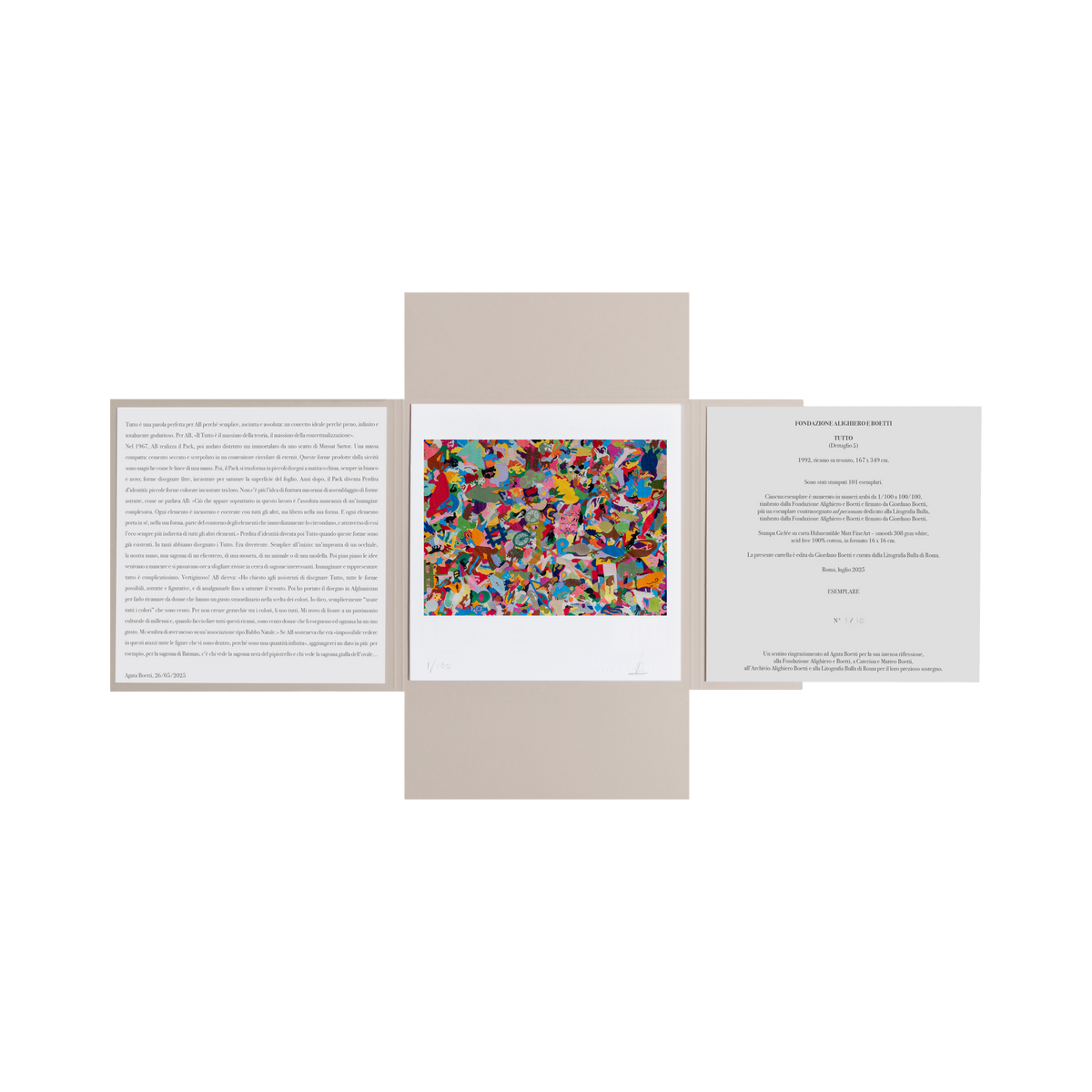
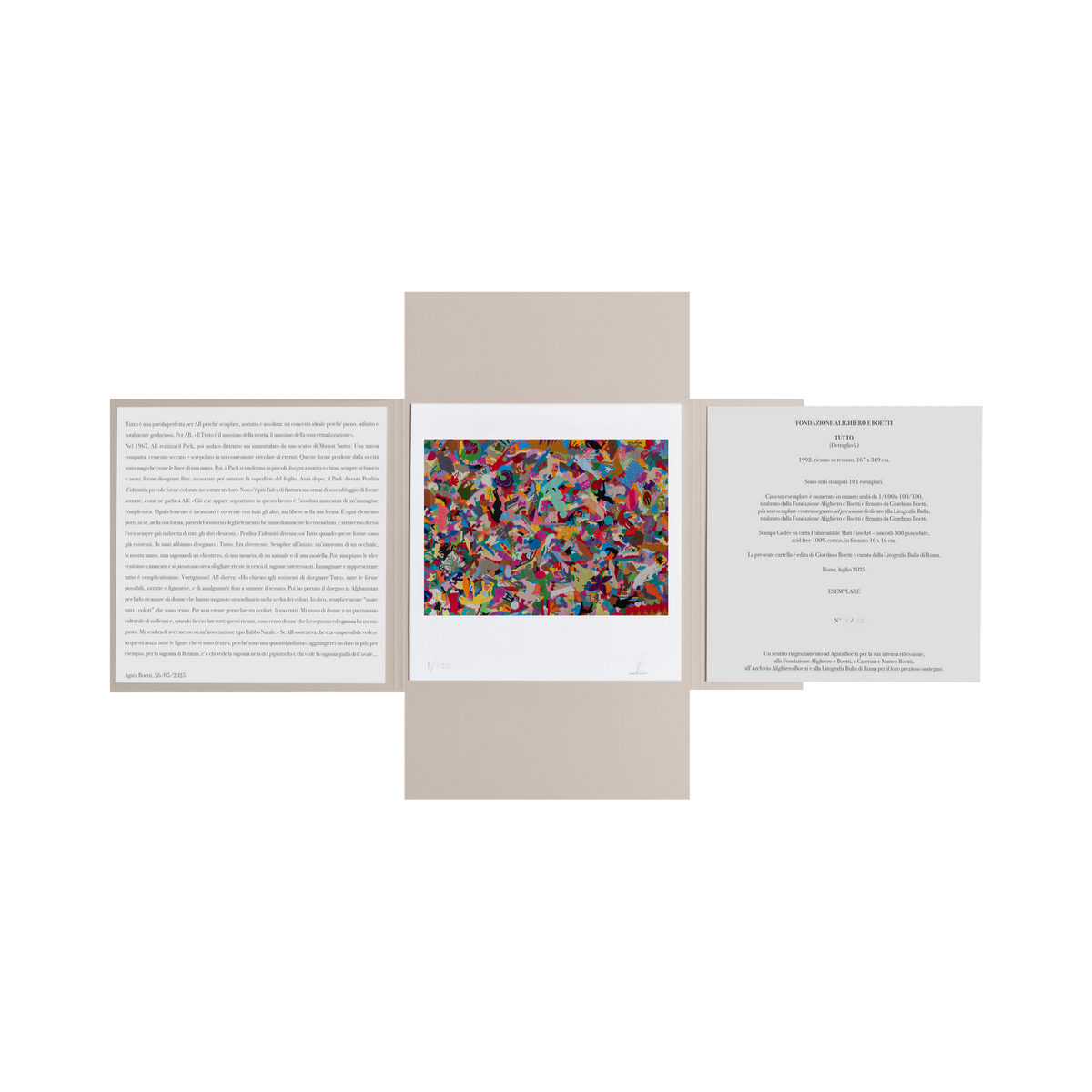
Everything is a perfect word for AB because it is simple, dry and absolute: an ideal concept because it is full, infinite and totally pleasurable. For AB, “Everything is the maximum of theory, the maximum of conceptualization.”
In 1967, AB created the Pack, which was later destroyed but immortalized by a photograph by Mussat Sartor. A compact mass: dried and cracked cement in a circular eternit container. These shapes produced by drought are as magical as the lines of a hand. Then, the Pack transforms into small pencil or ink drawings, always in black and white; densely drawn shapes, fitted together to saturate the surface of the sheet.
Years later, the Pack becomes Loss of Identity: small colored shapes fitted together. There is no longer the idea of fracture but rather of an assembly of abstract shapes, as AB used to say: “What appears above all in this work is the absolute lack of an overall image. Every element is fitted and coherent with all the others, but free in its form. And every element carries within itself, in its form, part of the outline of the elements that immediately surround it, and through them the increasingly indirect echo of all the other elements.” Loss of Identity then becomes Everything when these shapes already exist. Many of us have drawn the Everythings. It was fun. Simple at first: the imprint of a pair of glasses, our hand, the outline of a helicopter, a coin, an animal or a model. Then gradually ideas ran out and hours were spent leafing through magazines in search of interesting outlines. Imagining and representing everything is extremely complicated. Dizzying! AB used to say: “I asked the assistants to draw Everything, all possible shapes, abstract and figurative, and to blend them together until the fabric was saturated. Then I took the design to Afghanistan to have it embroidered by women who have an extraordinary taste in choosing colors. I simply say, “use all the colors,” which are a hundred. To avoid creating hierarchies among the colors, I use them all. I find myself facing a cultural heritage of millennia and, when I have all these embroideries made, there are a hundred women who execute them and each has her own taste. It seems to me that I have set up a Santa Claus-type association.” If AB maintained that it was “impossible to see in these tapestries all the figures that are inside them, because they are an infinite quantity,” I would add one more fact: for example, for the Batman outline, there is someone who sees the black outline of the bat and someone who sees the yellow outline of the oval...
Agata Boetti, 26/05/2025